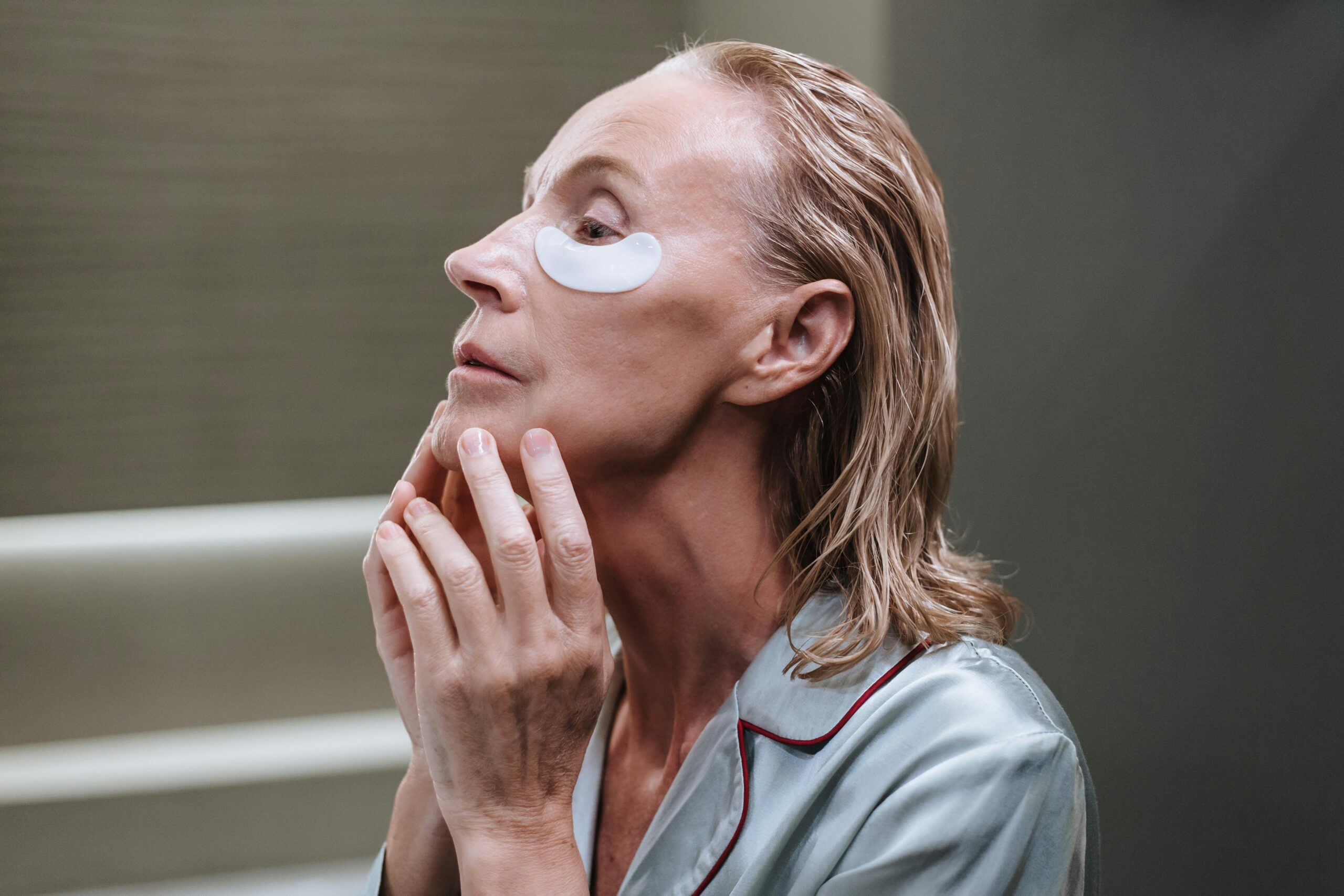
You notice it first around your eyes — a fine line that wasn’t there last year. Then the corners of your mouth. Maybe your jaw feels a little less defined. It’s not your imagination, and it’s not simply “getting older.” It’s collagen loss: one of the most well-documented biological processes in skin science, and one of the few you can actually do something about.
This guide breaks down exactly what happens inside your skin as it ages, what drives collagen decline, and which interventions have real science behind them. No miracle claims, no fluff — just what the research actually shows.
What You’ll Learn:
- Why skin ages at the cellular and molecular level
- The central role collagen plays in skin structure and firmness
- The internal and external factors that accelerate collagen breakdown
- Which ingredients and technologies have peer-reviewed evidence behind them
- How to build an effective, science-backed anti-aging strategy
What Aging Actually Does to Your Skin
Skin aging happens on two tracks simultaneously. The first is intrinsic aging — the biological clock ticking inside every cell. The second is extrinsic aging — damage accumulating from UV radiation, pollution, and lifestyle factors. Together, they reshape the skin at a structural level over time.
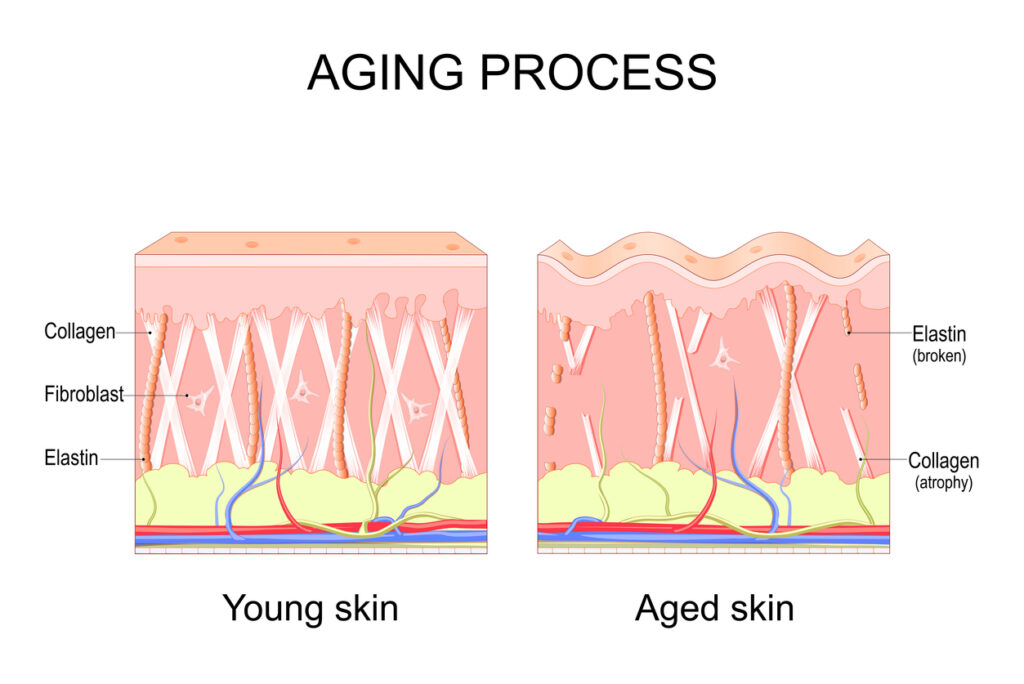
At its core, aging skin is skin that has lost its scaffolding. Young skin is dense, springy, and well-hydrated because it is rich in structural proteins — primarily collagen and elastin — and a moisture-binding molecule called hyaluronic acid. With age, the body produces less of all three, and the skin’s ability to repair what breaks down slows dramatically.
The visible result — wrinkles, sagging, dullness — is not cosmetic randomness. It is the outward expression of specific, measurable changes happening in the dermis, the skin’s deeper structural layer.
The Collagen Crisis: Why This Protein Is Everything
Collagen is the primary structural component of the skin’s dermis. Think of it as the mattress beneath your skin’s surface — when the coils are dense and intact, the surface is smooth and lifted. When they weaken, the surface sinks.
After age 25, the skin loses approximately 1% of its collagen content every year. By the 60s, studies show skin collagen content can be reduced by up to 30–40% compared to young adulthood. Collagen is produced by cells called fibroblasts — specialized cells in the dermis — which become less active with age, producing less collagen while simultaneously slowing their repair rate.
Elastin and Hyaluronic Acid: Collagen’s Essential Partners
Elastin is the protein responsible for skin’s ability to snap back after movement. With age, elastin fibers become fragmented and stiff — which is why repetitive expressions eventually etch themselves permanently into skin that has lost its resilience.
Hyaluronic acid (HA) is a naturally occurring molecule that holds up to 1,000 times its weight in water, giving young skin its plump, hydrated look. HA production drops significantly with age, contributing to the sunken, dehydrated appearance common in mature skin.
What Speeds Up Collagen Loss
Intrinsic aging is inevitable, but extrinsic factors significantly accelerate the process.
UV Radiation: The #1 Accelerator
UVA rays penetrate deep into the dermis and activate enzymes called matrix metalloproteinases (MMPs) that break down existing collagen while impairing new collagen synthesis. Dermatologists estimate that up to 80% of visible facial aging is caused by UV exposure, not biological aging alone. Daily SPF is, by a wide margin, the most evidence-backed anti-aging habit.
Oxidative Stress and Free Radicals
Pollution, cigarette smoke, and UV radiation generate unstable molecules called free radicals that damage collagen fibers through a process called oxidative stress. Antioxidants — Vitamin C, Vitamin E, niacinamide — neutralize free radicals before they can do this damage.
Glycation and Chronic Stress
When blood sugar is chronically elevated, sugar molecules bind to collagen fibers in a process called glycation, making them stiff and brittle rather than flexible. Separately, prolonged stress elevates cortisol, a hormone that suppresses collagen synthesis and accelerates its breakdown — chronically stressed individuals show measurably faster skin aging independent of other lifestyle factors.
The Science of Reversal: What Actually Works
Retinoids (Vitamin A Derivatives)
Retinoids are the most extensively studied anti-aging topical ingredient in dermatology. They directly upregulate collagen gene expression — telling fibroblasts to produce more collagen. Prescription tretinoin has decades of randomized controlled trial data confirming measurable improvements in fine lines and collagen density. Over-the-counter retinol works by the same mechanism at a slower pace.
Vitamin C (L-Ascorbic Acid)
Vitamin C is a required cofactor in collagen synthesis — the body literally cannot build collagen without it. Topically applied L-ascorbic acid also neutralizes free radicals and reduces hyperpigmentation. Concentrations of 10–20% in a stable formulation have the strongest evidence base.
Peptides
Peptides are short amino acid chains that signal fibroblasts to ramp up collagen production. When skin detects certain peptide sequences — mimicking the fragments released when collagen breaks down — it responds by producing more. Palmitoyl pentapeptide-4 (Matrixyl) is among the most clinically supported topical peptides for wrinkle reduction.
Energy-Based Devices: RF, Microcurrent, and Red Light Therapy
At-home energy devices represent one of the most exciting frontiers in anti-aging science. Three technologies have peer-reviewed support:
- Radiofrequency (RF): Delivers controlled heat into the dermis, triggering a wound-healing response that stimulates new collagen and elastin synthesis
- Microcurrent: Low-level electrical currents that increase cellular ATP production and upregulate collagen synthesis
- Red Light Therapy (660nm): Specific wavelengths that penetrate the dermis and stimulate fibroblast activity, reducing inflammation and promoting collagen repair
We’ll cover each of these in dedicated deep-dive articles coming up in this series.
Sunscreen: The Most Proven Anti-Aging Product of All
Daily broad-spectrum SPF 30+ is the single most evidence-backed anti-aging intervention available. A landmark 2013 Australian study found that people who applied sunscreen daily showed no detectable increase in skin aging over four and a half years compared to those who used it only occasionally.
Building Your Anti-Aging Strategy: A Tiered Approach
Understanding the science translates directly into a smarter approach. Think in three layers:
- Protect — Stop accelerated collagen loss before it starts (daily SPF, antioxidant serum, manage blood sugar and stress)
- Stimulate — Actively prompt new collagen production (retinoid at night, peptide moisturizer, energy-based devices)
- Support — Create the internal conditions for skin health (7–9 hours of sleep, hydration, Vitamin C-rich foods and adequate protein)
No single product reverses aging alone. The most effective approaches combine all three layers — and they work best when started earlier than most people think.
Conclusion
Collagen loss is not random, and it is not unstoppable. It follows predictable biological pathways that are well understood and, to a meaningful degree, modifiable. Your daily habits, your skincare ingredients, and the tools you choose all send real, measurable signals to your skin cells.
The science is clear: early, consistent action compounds over time. Whether you are in your 30s getting ahead of the curve, or your 50s ready to work with what you have, the biology is on your side.
References
- Varani, J., et al. (2006). “Decreased Collagen Production in Chronologically Aged Skin.” The American Journal of Pathology. https://www.ncbi.nlm.nih.gov/pmc/articles/PMC1606623/
- Fisher, G.J., et al. (2002). “Mechanisms of Photoaging and Chronological Skin Aging.” Archives of Dermatology. https://pubmed.ncbi.nlm.nih.gov/12437452/
- Baumann, L. (2007). “Skin Aging and Its Treatment.” Journal of Pathology. https://pubmed.ncbi.nlm.nih.gov/17200939/
- Naylor, E.C., Watson, R.E.B., & Sherratt, M.J. (2011). “Molecular Aspects of Skin Ageing.” Maturitas. https://pubmed.ncbi.nlm.nih.gov/21612874/
- Hughes, M.C., et al. (2013). “Sunscreen and Prevention of Skin Aging: A Randomized Trial.” Annals of Internal Medicine. https://pubmed.ncbi.nlm.nih.gov/23681059/
- Zasada, M., & Budzisz, E. (2019). “Retinoids: Active Molecules Influencing Skin Structure Formation in Cosmetic and Dermatological Treatments.” Advances in Dermatology and Allergology. https://www.ncbi.nlm.nih.gov/pmc/articles/PMC6791161/
- American Academy of Dermatology Association. (2024). “Cosmetic treatments: Collagen.” AAD.org. https://www.aad.org/public/cosmetic/younger-looking/collagen