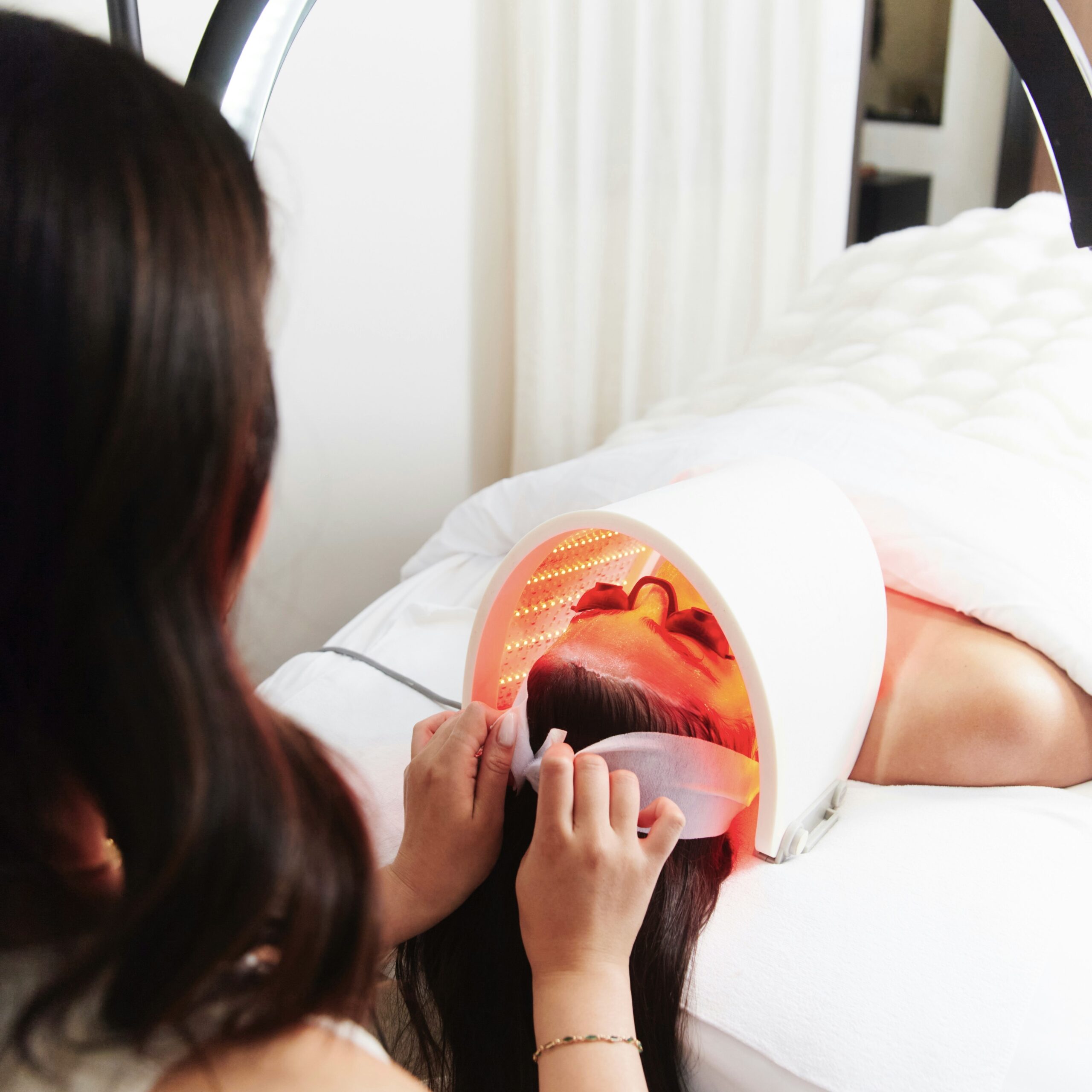
Red light therapy started as a NASA research project — originally developed to help wounds heal in space. Decades later, it’s on bathroom shelves worldwide, backed by a surprisingly solid body of clinical research. But with so many devices claiming miracle results, it’s worth understanding what the science actually says.
What You’ll Learn:
- What red light therapy actually is and what it isn’t
- Why 660nm is the key wavelength for skin anti-aging
- What happens inside your skin cells during a session
- What the clinical evidence shows about results
- How it compares to RF and microcurrent
- Who should avoid it
What Red Light Therapy Actually Is
Red light therapy, clinically known as photobiomodulation (PBM), uses specific wavelengths of light to stimulate biological activity in skin cells. It’s not UV light, it doesn’t burn, and it doesn’t work through heat the way RF does. Instead, it works by delivering light energy that cells can absorb and convert into cellular activity.
Think of it like photosynthesis for your skin. Just as plants use sunlight to power their biological processes, skin cells absorb specific wavelengths of red and near-infrared light to power repair, regeneration, and collagen production.
Different LED colors do different jobs:
- Blue light (415nm) targets acne-causing bacteria at the skin’s surface
- Red light (630–660nm) penetrates the dermis to stimulate collagen and fibroblast activity
- Near-infrared light (820–850nm) goes even deeper, reaching muscle and connective tissue
For anti-aging purposes, 660nm red light is the sweet spot — deep enough to reach fibroblasts in the dermis, well-evidenced in clinical research, and safe for regular home use.
What Happens Inside Your Skin
Here’s where it gets interesting. When 660nm light hits the skin, it’s absorbed by mitochondria — the energy-generating structures inside skin cells. Specifically, it activates an enzyme called cytochrome c oxidase, which kicks the mitochondria into higher gear and increases ATP production — the same cellular energy currency we discussed with microcurrent.
From there, a chain reaction follows:
- Fibroblasts become more active — producing more collagen and elastin
- MMP enzyme activity is reduced — meaning existing collagen breaks down more slowly
- Oxidative stress decreases — cells are better protected from free radical damage
- Skin cell turnover accelerates — fresh cells replace damaged ones faster
- Inflammation is reduced — creating a better environment for repair
The net result over weeks of consistent use: denser, better-structured skin with visibly reduced fine lines and improved firmness.
What the Research Actually Shows
Red light therapy has one of the more impressive evidence bases among at-home anti-aging technologies. Here’s what clinical studies consistently show:
Wrinkle reduction:
- Over 90% of participants in a clinical trial showed a measurable reduction in wrinkle depth and skin roughness after 12 sessions, with collagen production up 31% and collagen-degrading enzyme activity down 18% on the treated side
- A trial of 137 women aged 40–65 found a 31.6% reduction in periocular wrinkle volume after just 10 sessions over 4 weeks
- A 2023 clinical study following participants over three months found a 38.3% reduction in wrinkle depth by day 84, with early improvements visible as soon as day 28
Collagen and elastin:
- Low-level red light combined with near-infrared light significantly increased the gene expression of collagen type I, collagen type III, and elastin in human skin tissue — confirmed at both the cellular and structural levels
- Results from collagen-focused studies show continued improvement for up to one month after treatment ends, suggesting ongoing biological remodeling beyond the treatment period itself
Timeline:
- Early visible changes: weeks 2–4
- Significant collagen improvement: 8–12 weeks of consistent use
- Continued remodeling: up to a month post-treatment
How It Compares to RF and Microcurrent
All three technologies increase collagen and improve skin structure, but through different mechanisms and at different depths. Here’s a quick comparison:
| Red Light Therapy | RF | Microcurrent | |
|---|---|---|---|
| Mechanism | Light energy → mitochondria → ATP | Heat → wound healing response | Electrical current → muscle + ATP |
| Works on | Dermis (fibroblasts, collagen) | Deep dermis (collagen remodeling) | Facial muscles + fibroblasts |
| Primary benefit | Collagen synthesis, inflammation reduction | Skin tightening, wrinkle depth | Facial lift, muscle tone |
| Sensation | Gentle warmth or nothing | Warming sensation | Mild tingle or nothing |
| Best for | Fine lines, skin repair, overall texture | Moderate laxity, sagging | Jawline definition, contour |
The good news: these technologies complement each other well. Many users combine red light therapy with microcurrent or RF in separate sessions for broader anti-aging benefits.
Who Should Avoid Red Light Therapy
Red light therapy is one of the gentlest anti-aging technologies available, with an excellent safety record across skin types. That said, skip it if:
- You’re pregnant: out of general precaution, as sufficient data is lacking
- You take photosensitizing medications: certain antibiotics, retinoids, or acne medications increase light sensitivity; check with your doctor
- You have a history of skin cancer: consult a dermatologist before use
- You have active rashes or photosensitive skin conditions such as lupus
- You’re using it near your eyes without protection: always wear the provided eye protection or keep eyes closed during facial treatment
For most healthy adults, red light therapy is safe, non-invasive, and well-tolerated with no downtime.
Conclusion
Red light therapy is one of the most accessible, evidence-backed, and gentle anti-aging technologies available today. It doesn’t work overnight, but with consistent use, the clinical evidence for real collagen improvement and wrinkle reduction is genuinely compelling.
Like microcurrent and RF, it works best not as a standalone solution but as part of a broader strategy that includes good skincare, daily SPF, and healthy lifestyle habits. Used together, these technologies address aging from multiple angles, and that layered approach is where the most meaningful results come from.
References
- Weiss, R.A., et al. (2009). “Regulation of Skin Collagen Metabolism In Vitro Using a Pulsed 660nm LED Light Source.” Journal of Investigative Dermatology. https://pubmed.ncbi.nlm.nih.gov/19587693/
- Rezende, A.B., et al. (2023). “Photobiomodulation Reduces Periocular Wrinkle Volume by 30%: A Randomized Controlled Trial.” Photobiomodulation, Photomedicine, and Laser Surgery. https://pubmed.ncbi.nlm.nih.gov/36780572/
- Barolet, D., et al. (2023). “Reverse Skin Aging Signs by Red Light Photobiomodulation.” Photobiomodulation, Photomedicine, and Laser Surgery / PMC. https://pmc.ncbi.nlm.nih.gov/articles/PMC10311288/
- Ablon, G. (2014). “A Controlled Trial to Determine the Efficacy of Red and Near-Infrared Light Treatment in Patient Satisfaction, Reduction of Fine Lines, Wrinkles, Skin Roughness, and Intradermal Collagen Density Increase.” Photomedicine and Laser Surgery / PMC. https://pmc.ncbi.nlm.nih.gov/articles/PMC3926176/
- Al-Watban, F.A., et al. (2021). “Low-Level Red Plus Near Infrared Lights Combination Induces Expressions of Collagen and Elastin in Human Skin In Vitro.” International Journal of Cosmetic Science. https://pubmed.ncbi.nlm.nih.gov/33594706/
- Avci, P., et al. (2013). “Low-Level Laser (Light) Therapy in Skin: Stimulating, Healing, Restoring.” Seminars in Cutaneous Medicine and Surgery / PMC. https://pmc.ncbi.nlm.nih.gov/articles/PMC4126803/
- Mamalis, A., et al. (2024). “Unlocking the Power of Light on the Skin: A Review of Photobiomodulation.” PMC / NIH. https://pmc.ncbi.nlm.nih.gov/articles/PMC11049838/