Ectoin in Skincare: The Hydration Ingredient Worth Trying
What You’ll Learn:
- What ectoin is and where it comes from
- How it protects and hydrates skin, explained simply
- What real clinical trials found when testing it
- How it compares to ingredients like hyaluronic acid and ceramides
- How to actually add it to a routine
If you’ve noticed the word “ectoin” popping up on skincare ingredient lists lately, you’re not imagining it. This once-obscure compound has quietly built one of the stronger clinical evidence bases of any trending skincare ingredient. It also does something genuinely different from the hydrators already sitting in your routine.
A Skincare Ingredient Born in Extreme Places
Ectoin was first discovered in bacteria that live in some of the harshest environments on Earth. These include salt lakes, geysers, and deserts. These microbes produce ectoin as a survival tool. It protects their own cells from drying out or breaking down under extreme heat and salt stress.
Once scientists realized this same protective effect worked on human skin cells, ectoin made the jump from a biology curiosity into skincare formulas. It’s a good reminder that some of the most useful skincare ingredients don’t start out in a lab. They start out solving a much older survival problem in nature.
How Ectoin Actually Protects Skin, in Plain Terms
Most hydrating ingredients work in one of two ways. Some pull moisture up from deeper layers of skin. Others sit on the surface as a barrier. Ectoin works a bit differently.
It binds tightly to water molecules. This forms a kind of protective cushion around individual skin cells and their proteins, sometimes called a water shell. Think of it less like a moisturizer sitting on top of skin. Think of it more like each cell getting wrapped in its own tiny water cushion. That cushion helps the cell hold its shape. It also helps the cell resist stress from dryness, heat, and sun exposure.
Research has found something else worth noting. Ectoin calms specific inflammatory signals in skin. It also helps neutralize free radical damage caused by UV exposure. That gives it a protective role that goes beyond simple hydration. It’s doing quiet defensive work at the cellular level, not just adding moisture on top.
What Happens When Skin Is Put to the Test
Unlike a lot of trending ingredients, ectoin isn’t backed by lab studies alone. It has real clinical trial data behind it, and the results are notable.
A 2022 review pulled together data from six clinical trials. Together, these trials covered 525 people. Most were dealing with eczema. One group was managing skin irritation caused by acne medication.
Some of the standout results include the following. In a trial of 242 people, an ectoin cream cut eczema severity scores by more than half over four weeks. Itch intensity dropped by more than half as well. In a separate trial of 65 adults, an ectoin cream performed just as well as an established, medically recognized anti-itch cream. There was no meaningful difference between the two. In people using a strong acne medication known for drying out skin, an ectoin cream matched or outperformed a standard soothing cream over six months. Hydration improved noticeably within the first month of use.
Side effects across all these trials stayed minimal. Most participants reported nothing beyond brief tingling or a mild burning feeling, and very few people dropped out because of it. That’s a stronger evidence base than most viral skincare ingredients can claim, and it’s the kind of data usually reserved for medicated treatments rather than cosmetic actives.
Bouncing Back After Skin Stress
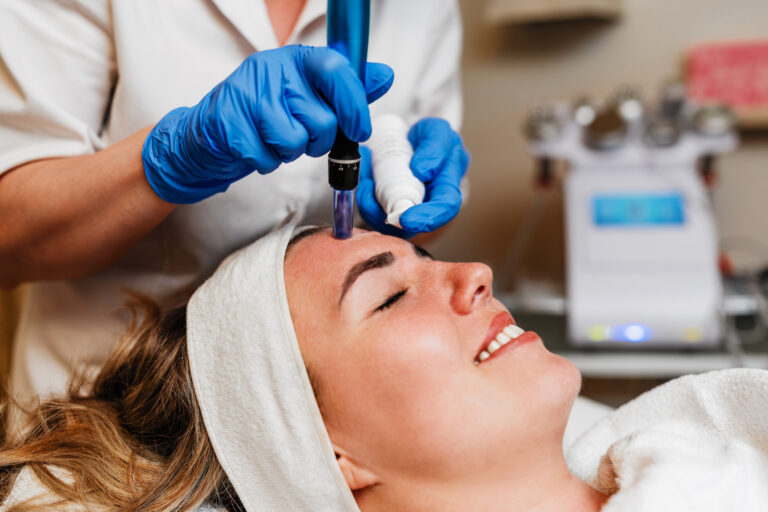
A 2025 study looked at something more intense than everyday dryness. It tested ectoin on skin recovering after a fractional CO2 laser treatment. That kind of laser deliberately creates controlled damage to trigger skin renewal, so the skin involved was under real stress.
Applying ectoin cream afterward made a measurable difference. Redness dropped by 30%. Water loss from the skin fell by 15%. Hydration increased by 30% compared to no treatment at all. The higher the concentration used, and the more consistently it was applied, the better the results turned out to be.
This suggests ectoin isn’t just useful for everyday comfort. It may also help skin recover faster and more comfortably after more aggressive treatments, sun damage, or other environmental stress. That makes it a compound worth considering both as a daily habit and as part of aftercare following in-office procedures.
Ectoin vs. Hyaluronic Acid vs. Ceramides
| Ingredient | What it mainly does | Best suited for |
|---|---|---|
| Ectoin | Forms a protective water shell around cells; calms inflammation | Sensitive, stressed, or recovering skin |
| Hyaluronic acid | Draws water into the skin’s surface layers | General hydration, plumping fine lines |
| Ceramides | Rebuilds the skin’s outer barrier structure | Dry, barrier-damaged, or flaky skin |
These three ingredients aren’t really competing with each other. Each one covers a different job. That’s why some formulas combine all three rather than relying on just one, since together they hydrate, protect, and rebuild skin from a few different angles at once.
How to Add Ectoin to a Routine
Ectoin is generally well tolerated, which makes it easy to work into an existing routine without much adjustment. It shows up most often in serums, moisturizers, and after-sun or post-procedure care products, usually at concentrations between 1% and 7% based on the clinical research available.
Because it’s gentle, it can be layered with most other active ingredients without much concern for irritation. It pairs particularly well with barrier-focused ingredients like ceramides, and it can be a useful addition for anyone using stronger actives like retinoids, since it may help offset some of the dryness those ingredients cause. For daily use, applying it morning or night works fine. For post-treatment recovery, following your provider’s specific aftercare instructions still takes priority over any general skincare advice.
Who Should Try It
Ectoin is a strong fit for people with sensitive or reactive skin. It’s also worth considering for anyone dealing with eczema-prone or easily irritated skin. People recovering from treatments like laser resurfacing, chemical peels, or acne medication that leave skin feeling raw or dehydrated may benefit as well. Because the clinical trials showed a very low rate of side effects, it’s a reasonable option even for people who tend to react poorly to stronger actives.
Conclusion
Ectoin stands out from most trending ingredients for one clear reason. It isn’t just backed by lab studies. It has real clinical trial data showing it calms irritated skin, holds up against established medicated creams, and helps skin recover after more intense treatments. It’s not a replacement for hyaluronic acid or ceramides. Instead, it fills a gap those ingredients don’t cover: protecting and stabilizing skin cells directly, especially when skin is under stress.
FAQ
What does ectoin actually do for skin?
It forms a protective layer of water around skin cells. This helps them resist dryness, heat, and irritation, while also calming inflammation.
Is ectoin better than hyaluronic acid?
Not better, just different. Hyaluronic acid mainly draws water into skin’s surface. Ectoin protects and stabilizes the cells themselves, so many people benefit from using both.
Who benefits most from using ectoin?
People with sensitive or eczema-prone skin tend to benefit most. The same goes for anyone recovering from treatments like laser resurfacing or drying acne medications, based on the clinical trial results available so far.