Are Peptides the Future of Anti-Aging Skincare? (2026 Guide)
Open any skincare blogs in 2026 and one word keeps showing up next to retinol and vitamin C: peptides. They are marketed as gentler, science-backed, and somehow both cutting-edge and skin-friendly at the same time.
That is a big promise. So is it true, or is “peptides” just this decade’s favorite label to slap on a bottle? Here is a grounded look at what peptides actually do, where the evidence stands, and whether they deserve the “future of anti-aging” title.
What You’ll Learn:
- What peptides actually are, in plain terms
- Why they are trending right now
- Where the real evidence is strongest, and where it is thinner
- How peptides compare to retinol
- Whether peptides deserve a permanent spot in your routine
What Peptides Actually Are
Peptides are short chains of amino acids, the same building blocks that make up the proteins in your skin. Think of them as tiny messages your skin cells can read and react to.
Depending on the specific peptide, that message can tell skin cells to:
- Produce more collagen
- Calm inflammation
- Deliver helpful minerals like copper into skin tissue
- Relax the tiny muscle movements that create expression lines
That last point is why some peptides get nicknamed “topical Botox,” though the effect is much milder than an actual injection.
Why Peptides Are Having a Moment
A few forces are converging here. The global market for peptide-based skincare has grown into a multi-billion dollar category, with brands racing to add new peptide blends to serums, creams, and eye treatments.
Part of the appeal is genuinely earned. Peptides tend to be well tolerated, even on sensitive skin, which puts them in a different lane than retinol or strong acids that can cause redness and peeling. People who cannot tolerate retinol are actively looking for alternatives, and peptides have stepped into that gap.
The other part of the appeal is simply good timing. “Peptide” sounds scientific and premium, and that framing sells.
The Case For: Where the Evidence Is Strong
Not every peptide claim is hollow. Two names come up constantly, and both have real clinical backing behind them.
Copper peptides (GHK-Cu)
This is one of the best-studied peptides in skincare.
- In a 12-week clinical trial, a GHK-Cu facial cream applied to women with mild to advanced photoaging increased skin density and thickness, reduced sagging, and visibly reduced fine lines and wrinkle depth.
- A separate randomized, double-blind trial found that GHK-Cu reduced wrinkle volume by 55.8% compared to a control serum, and outperformed a well-known peptide product by 31.6% in wrinkle volume reduction. Other trials found GHK-Cu improved collagen production in more women than either a vitamin C cream or retinoic acid did in the same study.
Matrixyl (Palmitoyl Pentapeptide-4)
In a double-blind trial on 93 women with visible fine lines, a cream containing this peptide produced measurable improvement in wrinkles and overall skin appearance after 12 weeks.
The Case Against: Where the Trend Outruns the Data
Here is the honest counterpoint. Peptide research, as a whole, is younger and thinner than the decades of evidence behind retinoids.
- Many peptide studies use small sample sizes, sometimes fewer than 50 participants
- A meaningful share of the strongest results trace back to researchers or labs connected to the companies selling that peptide
- Some peptide categories, like enzyme-inhibiting peptides, have promising lab-level mechanisms but very little human trial evidence to confirm real-world results
- Peptides are large, often unstable molecules, which makes it hard for them to penetrate skin’s outer barrier in a stable, active form once they’re inside a jar sitting on a shelf
There is also a labeling problem, similar to the one in traditional skincare marketing. A product boasting an “advanced peptide complex” without naming a specific, studied peptide is not giving you anything you can actually verify.
Peptides vs. Retinol: Not Really a Competition
People often ask which one is “better.” That framing misses the point, because they are not solving the same problem.
| Peptides | Retinol | |
|---|---|---|
| Evidence base | Growing, but younger and smaller-scale | Decades of large, independent trials |
| Irritation risk | Low, well tolerated by most skin types | Higher, especially early in use |
| Best for | Gentle collagen support, sensitive skin, layering with other actives | Deep cell turnover, stronger wrinkle and texture correction |
| Speed of visible results | Gradual, several weeks | Gradual, but with a longer track record of dramatic change |
Peptides and retinol are not rivals. Peptides tend to work well as a complementary layer alongside retinol, not as a replacement for it, especially for people who cannot tolerate a full retinol routine.
How to Actually Use Peptides in a Routine
If you decide to add a peptide product, a few practical habits make a real difference in whether it performs the way the studies suggest it can.
- Look for a specific named peptide on the ingredient list, such as Copper Tripeptide-1 or Palmitoyl Pentapeptide-4, rather than a vague “peptide complex”
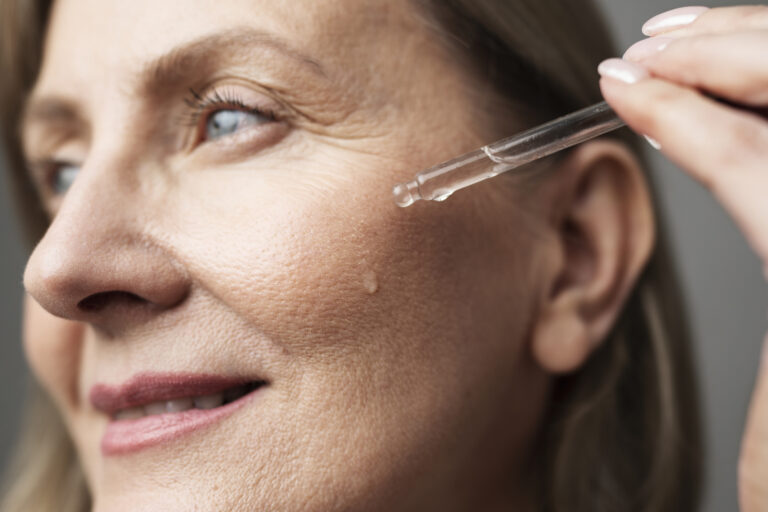
- Apply peptide serums to clean, slightly damp skin, since some peptides absorb better in a hydrated environment
- Store products away from direct heat and sunlight, since many peptides break down when exposed to high temperatures or UV light over time
- Pair peptides with a stable moisturizer to help lock in the product rather than layering it under something that will immediately evaporate
- Give it time. Most peptide studies measure results at 8 to 12 weeks, not days, so judge a product on that timeline rather than expecting overnight change
So, Is This Really the Future?
Peptides are not a passing trend. The research base is real, growing, and increasingly independent of the brands selling the products. That earns them a legitimate, lasting place in skincare routines.
But “the future of anti-aging” oversells where things currently stand. Peptides are a strong complementary tool, not a replacement for the ingredients with the deepest evidence, like retinoids and SPF. Peptides are becoming a permanent fixture in modern routines, not the single ingredient that changes everything.
If your skin tolerates retinol well, peptides are a nice addition, not a substitute. If retinol has always irritated you, a well-formulated copper peptide or Matrixyl product is a good place to start.
References
- “Regenerative and Protective Actions of the GHK-Cu Peptide in the Light of the New Gene Data” ; https://pmc.ncbi.nlm.nih.gov/articles/PMC6073405/
- “Peptides: Emerging Candidates for the Prevention and Treatment of Skin Senescence: A Review” ; https://pmc.ncbi.nlm.nih.gov/articles/PMC11762834/
- “GHK-Cu for Skin: What the Evidence Shows” ; https://rethinkpeptides.com/articles/ghk-cu-for-skin-what-the-clinical-evidence-actually-shows
- “Peptide Skincare Market Research Report 2033” ; https://marketintelo.com/report/peptide-skincare-market