
Hormones and Skin Aging: What Changes Beyond Menopause
Most people know menopause ends fertility. Far fewer realize it also triggers one of the most dramatic shifts in skin biology across the entire lifespan, one that continues well past the years of hot flashes and night sweats. Skin is a hormone-responsive organ. The hormonal changes of menopause reshape it at a structural level, affecting collagen, elasticity, and moisture long after the more commonly discussed symptoms fade.
What You’ll Learn:
- Why skin is considered a hormone-responsive organ
- What happens to estrogen levels before, during, and after menopause
- The specific structural changes estrogen decline causes, and how fast they happen
- How other hormones like androgens and DHEA factor in
- Whether hormone therapy meaningfully helps skin, and what the real tradeoffs are
Skin Is a Hormone-Responsive Organ
Skin contains estrogen and androgen receptors throughout the epidermis, dermis, and hair follicles. This means it responds directly to circulating hormone levels, not just to time and sun exposure. Estrogen specifically targets keratinocytes, fibroblasts, and melanocytes. These are the cells responsible for skin’s surface renewal, structural support, and pigmentation. This is why skin aging around menopause behaves differently from the slower aging seen in the decade prior. A major biological input is shifting rapidly, not gradually, and skin cells are wired to respond to that shift directly.
What Happens to Estrogen at Menopause
Estrogen levels peak in a woman’s mid-to-late 20s. They decline by roughly 50% by age 50, then drop far more sharply once menopause begins. Collagen production actually starts slowing even earlier, by about 1-2% per year starting around age 25. This means hormonally-driven skin changes are underway well before menopause becomes the primary driver. What makes menopause distinct is the acceleration that follows. A gradual decline gives way to a much steeper drop in estrogen around the final menstrual period, creating a genuinely different phase of skin aging rather than a simple continuation of what came before.
Timeline: When Skin Changes Actually Happen
The pace of skin again and skin collagen loss isn’t steady across a woman’s life. It’s heavily concentrated in a specific window right around menopause itself.
| Life Stage | Typical Age Range | What’s Happening to Skin |
|---|---|---|
| Pre-menopause | 20s-30s | Collagen declines gradually, roughly 1-2% per year |
| Perimenopause | Mid-30s to mid-50s | Estrogen fluctuates unpredictably; skin may swing between dryness and oiliness |
| First 1-2 years post-menopause | Typically early-to-mid 50s | The steepest collagen loss occurs here; much of the total 5-year loss happens in this narrow window |
| First 5 years post-menopause | Early-to-late 50s | Up to 30% of dermal collagen can be lost during this period |
| 15 years post-menopause | Through the 60s and beyond | Collagen continues declining at an average of 2.1% per postmenopausal year |
This table helps explain why skin changes often feel sudden to women in their early 50s. The loss isn’t gradual at this stage. It’s compressed into a short, biologically active window.
The Direct Effects on Skin Structure
Beyond the raw numbers, estrogen decline changes skin in several distinct ways:
- Decreased collagen production: fibroblasts become measurably less active as estrogen drops, directly reducing skin’s structural scaffolding
- Reduced elasticity: fewer elastin fibers are produced, and existing fibers break down faster, which is why skin loses its ability to bounce back after stretching
- Increased dryness: estrogen supports the skin’s natural oil production and moisture retention, so declining levels often show up first as persistent dryness rather than wrinkling
- Thinning of the dermis: as collagen and moisture decline together, skin becomes measurably thinner and more fragile, increasing susceptibility to bruising
- Slower wound healing: estrogen plays a role in skin’s repair mechanisms, so postmenopausal skin can take longer to heal from cuts or irritation
Nearly 70% of menopausal women identify skin laxity, or sagging, as their top skin-related concern. Yet relatively few connect it directly back to hormonal changes rather than aging in general.
Beyond Estrogen: Other Hormones at Play
Estrogen isn’t acting alone. Androgens, including testosterone and its more potent derivative DHT, work in direct opposition to many of estrogen’s protective effects on skin. Their relative influence shifts as estrogen drops. DHEA and growth hormone also decline with age and are believed to play a role in skin aging, though the research base here is thinner than for estrogen. This rebalancing among multiple hormones, not just one hormone quietly declining, is part of why menopause produces such a distinct shift in skin compared to ordinary chronological aging.
Does Hormone Therapy Help Skin?
Research on hormone therapy shows measurable effects on skin. In one clinical study, topical estrogen applied to photoaged facial skin increased skin thickness by nearly 8%. It also produced increases in epidermal thickness and reductions in fine wrinkles. A separate study on topical estradiol found collagen amount increased significantly after 16 weeks of use, with improvements in both epidermal and dermal thickness.
That said, the research picture isn’t uniformly clean. A 2025 review found that most studies reported positive associations between hormone therapy and improved menopausal skin quality. However, results were sometimes inconsistent across trials. Clinical guidelines still do not support HRT specifically for treating estrogen-deficient skin, due to a lack of large, skin-focused clinical trials.
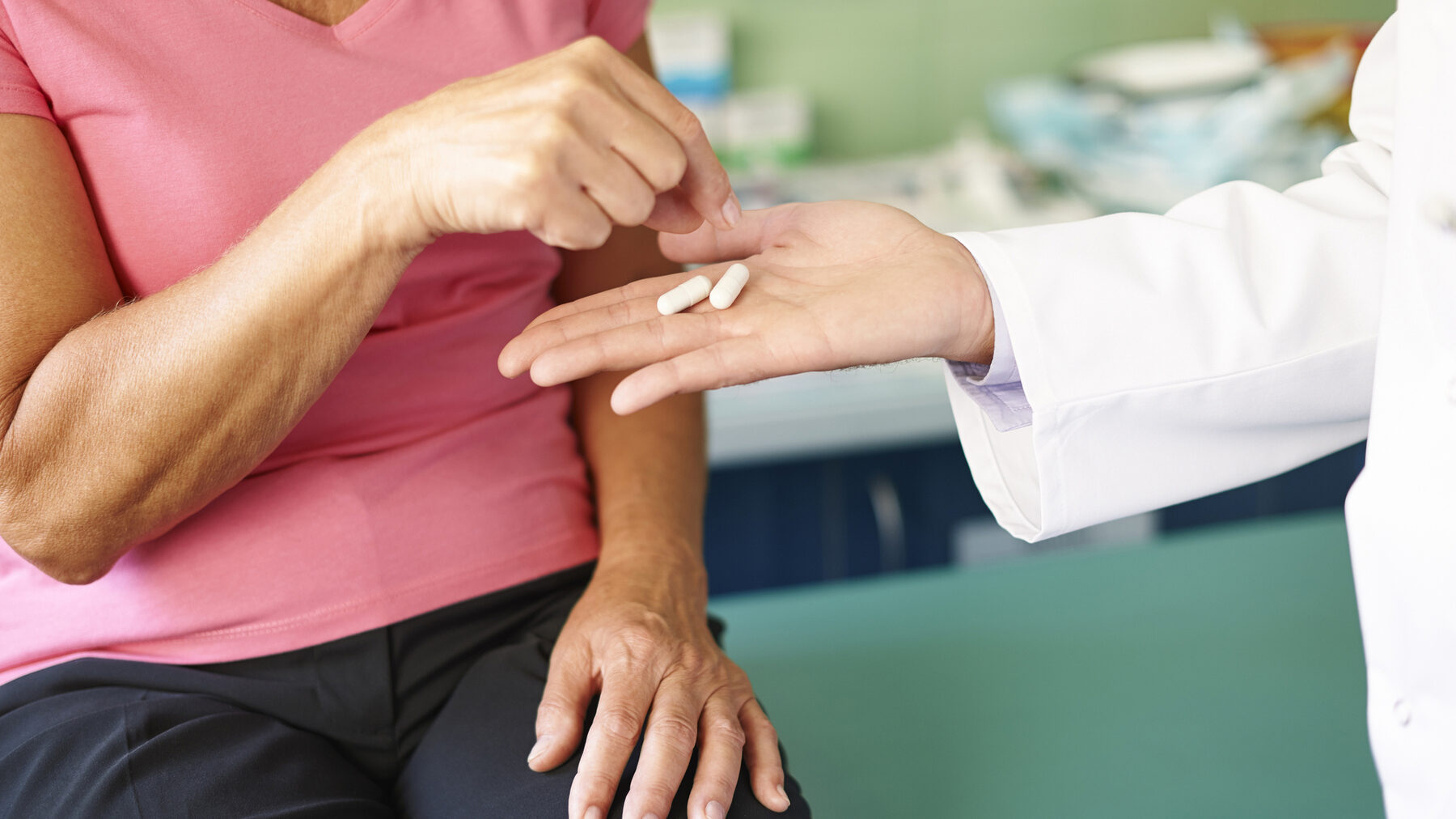
In practice, hormone therapy is approved and prescribed for broader menopausal symptoms. Skin benefits are considered a welcome secondary effect, not a primary treatment indication. Anyone considering it should discuss the full cardiovascular, cancer, and symptom-related risk-benefit picture with a physician, rather than treating it as a cosmetic intervention.
What This Means Practically
Given how concentrated collagen loss is in the early postmenopausal years, the most useful window for action is often earlier than expected. Ideally, it starts in perimenopause rather than waiting for visible changes to appear.
- Prioritize barrier repair: look for moisturizers with ceramides, glycerin, and hyaluronic acid rather than aggressive actives, especially if skin feels reactive
- Wear broad-spectrum SPF daily: UV exposure compounds estrogen-related collagen breakdown, making sun protection more important during this transition
- Introduce retinoids carefully: they support collagen production through a separate, non-hormonal pathway, but should be added gradually if skin has become more sensitive
- Avoid over-exfoliating: dull or textured skin can tempt people toward more frequent exfoliation, but this often worsens dryness and barrier disruption
- Add vitamin C where tolerated: it acts as a cofactor in skin’s own collagen production process, complementing rather than replacing hormonal effects
For women experiencing more significant symptoms, this is a reasonable point to raise with a doctor. Skin fragility, unusually slow-healing wounds, or sudden changes that feel hard to manage with skincare alone may reflect broader menopausal changes worth addressing directly.
Conclusion
Menopause-related skin aging is a distinct, hormonally-driven process, not simply “getting older faster.” The steep, compressed collagen loss that occurs in the first few years after menopause explains why so many women experience changes that feel sudden rather than gradual. Understanding this timeline makes it easier to act during the window when intervention matters most. Whether that means adjusting a skincare routine, prioritizing sun protection, or having an informed conversation with a doctor about hormone therapy, recognizing the biological “why” behind these changes puts women in a far better position to respond thoughtfully rather than reactively.
References
- Viscomi, Bianca et al. “Managing Menopausal Skin Changes: A Narrative Review” Journal of cosmetic dermatology vol. 24, 2025.
- Thornton, M Julie. “Estrogens and aging skin.” Dermato-endocrinology vol. 5,2, 2013.
- Rzepecki, Alexandra K et al. “Estrogen-deficient skin: The role of topical therapy.” International journal of women’s dermatology vol. 5,2, 2019.
- Phillips, T J et al. “Hormonal effects on skin aging.” Clinics in geriatric medicine vol. 17,4, 2001.
- “Perimenopause, Menopause, and Postmenopause Skin Changes” Lancer Dermatology, 2026.