
Beginner’s Guide to Anti-Aging Devices 2026: Which One Is Right for You?
Walk into the anti-aging device space for the first time and it can feel genuinely overwhelming. Microcurrent wands, RF devices, LED masks, HIFU treatments — each one claims to be the answer, and they range from $100 home devices to $2,000 clinic sessions. Where do you even begin?
The truth is, there’s no single “best” device or treatment. The right one depends entirely on what your skin actually needs and whether you’re looking for a daily home routine, a periodic clinical treatment, or a combination of both. This guide cuts through the noise, explains the core technologies in plain language, and helps you figure out which one makes the most sense as your starting point.
What You’ll Learn:
- The core anti-aging technologies and what each one does
- The difference between clinic and home versions of each technology
- Which technology matches your specific skin concern
- What to look for and watch out for when buying a home device
- How to combine technologies for broader results
- What to realistically expect in your first 90 days
The Four Core Technologies
Here’s a snapshot of the technologies with the strongest clinical evidence for anti-aging:
| Technology | How It Works | Primary Benefit | Available As |
|---|---|---|---|
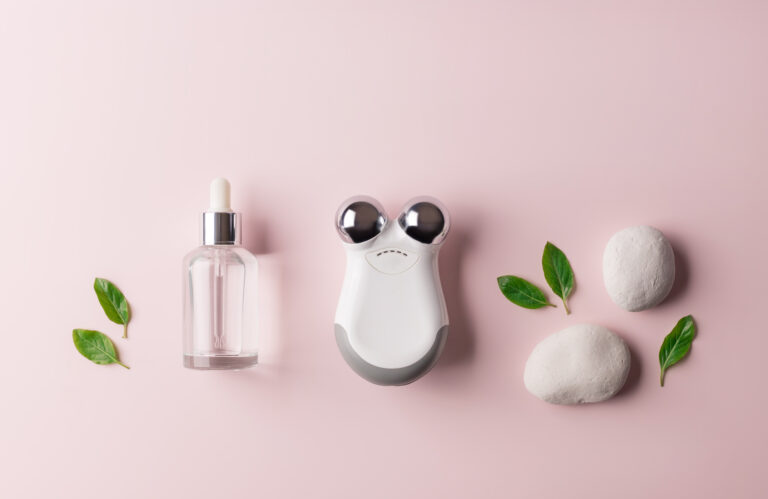
| Microcurrent | Gentle electrical currents tone facial muscles and boost cellular energy | Facial lift, jawline definition, contour | Both clinic & home |
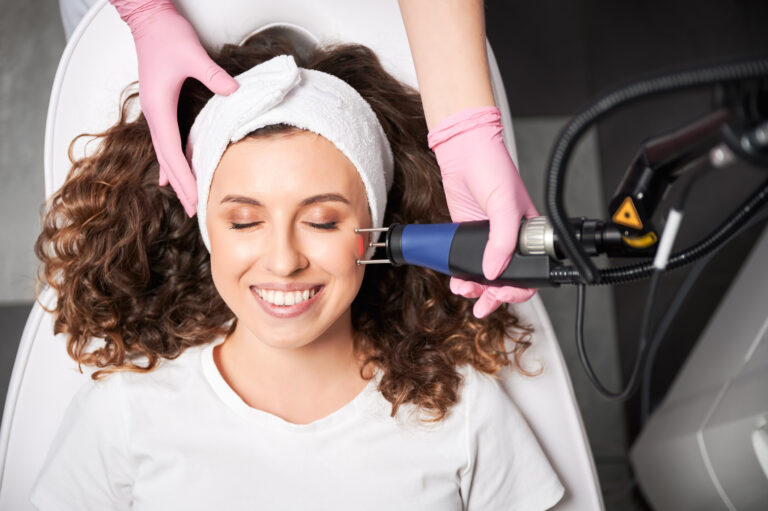
| RF (Radiofrequency) | Controlled heat rebuilds collagen deep in the dermis | Skin tightening, wrinkle reduction, laxity | Both clinic & home |
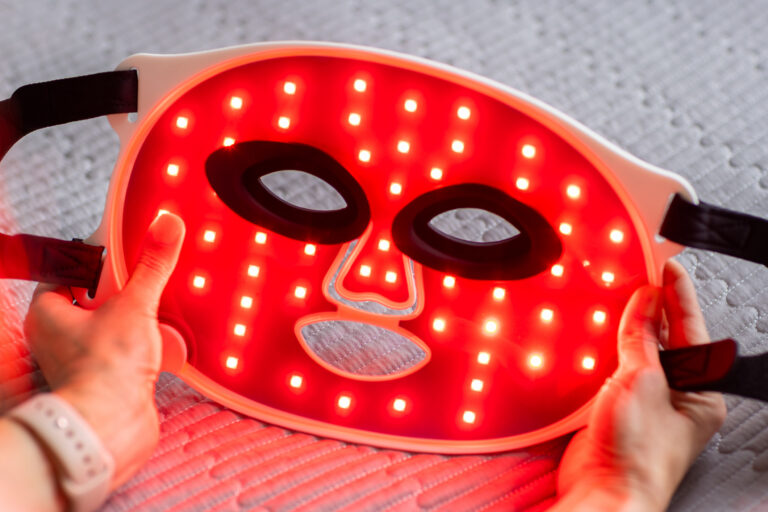
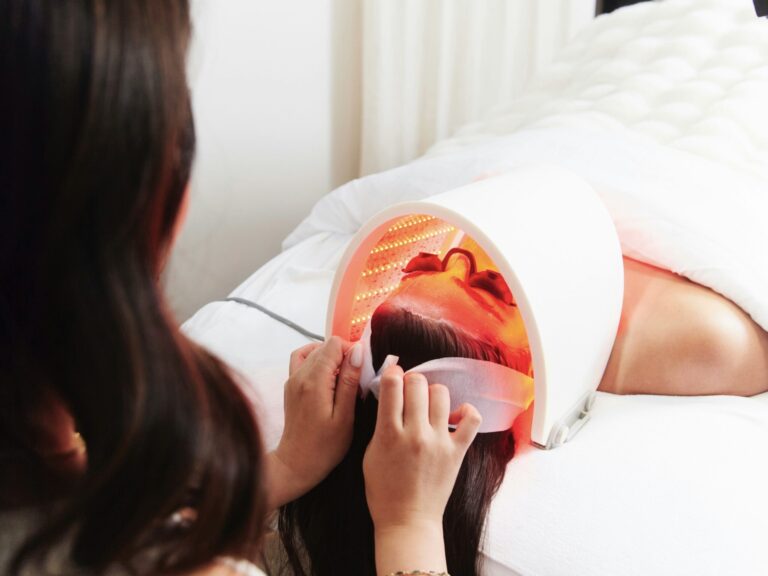
| Red Light Therapy | Specific light wavelengths stimulate fibroblasts and reduce inflammation | Fine lines, texture, overall skin repair | Both clinic & home |
| HIFU (Ultrasound) | Focused ultrasound energy reaches the deepest skin layers | Significant lifting, deep structural tightening | Primarily clinic; limited home versions |
Each works differently, targets different skin layers, and suits different concerns. None of them does everything, which is actually useful when you’re trying to choose.
A Note on Clinic vs. Home Versions
Most of these technologies exist in two forms: professional clinical versions and consumer home devices. The core science is the same, but the energy levels differ significantly.
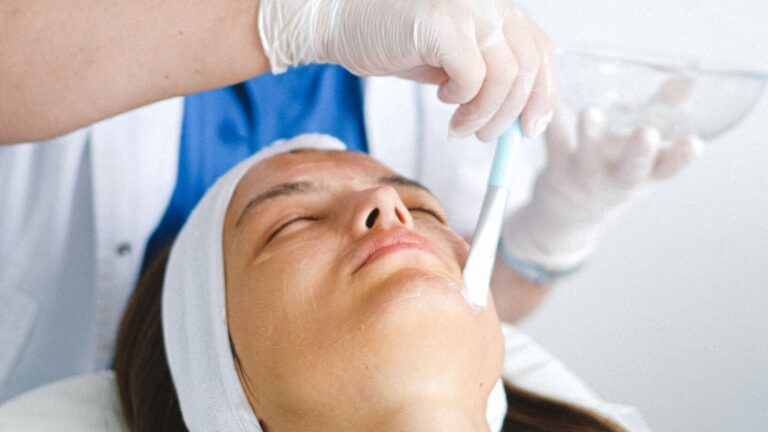
- Clinical treatments deliver higher energy, faster results, and require trained operators, but they’re expensive per session and less frequent
- Home devices operate at lower, consumer-safe energy levels. The results build more gradually but you can use them consistently as part of a daily or weekly routine
- HIFU is the exception. The clinical version (Ultherapy and similar) delivers significantly more powerful results than home versions, and for anyone considering HIFU seriously, a clinic treatment is the stronger starting point
Neither is universally better. Many people get the best results by combining a periodic clinic treatment with regular home device use in between — using each for what it does best.
Start Here: What’s Your Main Concern?
Before spending anything, identify your primary skin concern. This single step points you toward the right technology immediately:
- “My skin looks dull and I have fine lines” → Start with red light therapy
- “My jawline and cheeks are losing definition” → Start with microcurrent
- “My skin feels loose and I have deeper wrinkles” → Start with RF
- “I want significant lifting — I’m dealing with real sagging” → Consider a HIFU treatment as your foundation, supplemented by home devices
- “I’m in my late 20s or 30s and want to get ahead of aging” → Start with red light therapy. It’s the most accessible, most forgiving entry point with the broadest preventive benefits
If you’re genuinely unsure, red light therapy is the safest and most versatile starting point for most beginners. It has a gentle learning curve, no technique-dependent risks, and a strong clinical track record for general skin improvement.
What to Look for When Buying a Home Device
This is where most beginners go wrong — focusing on aesthetics or price alone rather than the features that determine whether a device actually works.

Safety Certifications First
- FDA clearance (in the US) is the gold standard signal that a device has been reviewed for safety and basic efficacy claims. Look for this explicitly, not just “FDA registered” (which means the manufacturer is registered, not the device itself)
- CE marking covers European market standards
- Avoid any device that makes no mention of safety certifications whatsoever
Technology-Specific Specs to Check
For red light therapy:
- True LED arrays at 630–660nm (red) and 820–850nm (near-infrared) for skin anti-aging
- Look for irradiance between 20–50 mW/cm² for facial anti-aging
- Larger panels cover more surface area per session
For microcurrent:
- Adjustable intensity levels — essential for beginners building up gradually
- Conductive gel compatibility — confirm it comes included or is readily available
- Multiple modes for different facial zones
For RF:
- Built-in temperature control or auto-shutoff
- Adjustable energy levels for different facial areas
- Confirmed facial-use design — not all RF devices are calibrated for the face
Red Flags to Avoid
Not all devices are worth your money. Walk away from anything that:
- Claims “results in 3 days” or “equivalent to a surgical facelift” — no at-home device delivers this
- Lists no safety certifications anywhere in the product description
- Cannot tell you the wavelength (for LED) or energy frequency (for RF) — legitimate devices always publish their specs
- Is priced suspiciously low for the technology claimed
- References no clinical studies or peer-reviewed backing at all
Can You Use More Than One?
Yes — combining technologies is where the most comprehensive results come from, since each targets a different aspect of aging. A few effective pairings:
- Red light therapy + microcurrent — repair and regenerate while lifting and toning; use in separate sessions
- RF + red light therapy — deep collagen rebuilding plus surface repair and inflammation reduction
- HIFU clinic treatment + home microcurrent or RF — professional structural lifting as a foundation, maintained between sessions with home devices
One rule: start with one technology first. Give it 8–12 weeks before adding a second. That way you know what’s working, your skin adapts gradually, and you avoid overwhelming it with too many new inputs at once.
Your First 90 Days: What to Realistically Expect
The most common reason people give up on anti-aging devices is unrealistic expectations. Here’s an honest picture:
- Weeks 1–2: Skin is adapting. Minor changes in texture or radiance are possible, but no dramatic results yet — this is completely normal
- Weeks 3–4: Early visible changes begin for most users — slight improvement in tone, definition, or texture depending on the technology
- Weeks 5–8: More consistent results become apparent — fine lines soften, contour sharpens slightly, or skin feels firmer
- Weeks 9–12: Meaningful collagen remodeling shows up — most clinical studies measure their primary endpoints at this stage for a reason
- Beyond 12 weeks: Maintenance mode — drop to 2–3 sessions per week to sustain results
Track progress with photos in consistent lighting every two weeks. Day-to-day changes are easy to miss, but clearly visible in side-by-side comparisons.
Conclusion
The best anti-aging device or treatment is the one that matches your actual skin concern, has legitimate safety credentials, and most importantly, one you’ll use or book consistently. Technology matters far less than habit and follow-through.
Start with one technology, learn it properly, commit to 90 days, then reassess. That approach will always outperform buying three devices and using all of them occasionally.
References
- “How to Select Anti-Aging Skin Care Products.” https://www.aad.org/public/everyday-care/skin-care-secrets/anti-aging/selecting-anti-aging-products
- “How to Choose the Right Skincare Device for Your Skin Type.” https://pmdbeauty.com/blogs/pmd/how-to-choose-the-right-skincare-device-for-your-skin-type
- “Comprehensive Guide to Choosing the Best Beauty Machine for Anti-Aging.” https://www.huimainbeauty.com/guides/comprehensive-guide-to-choosing-the-best-beauty-machine-for-anti-aging/
- “Home Laser Device Buying Guide: What Matters Most.” https://www.niraskin.com/blogs/blog/wrinkle-laser-buying-guide-2025
- “Are Facial Devices Worth It? A Science-Informed Guide for Smarter Skincare” https://www.zendaguide.com/post/best-facial-devices