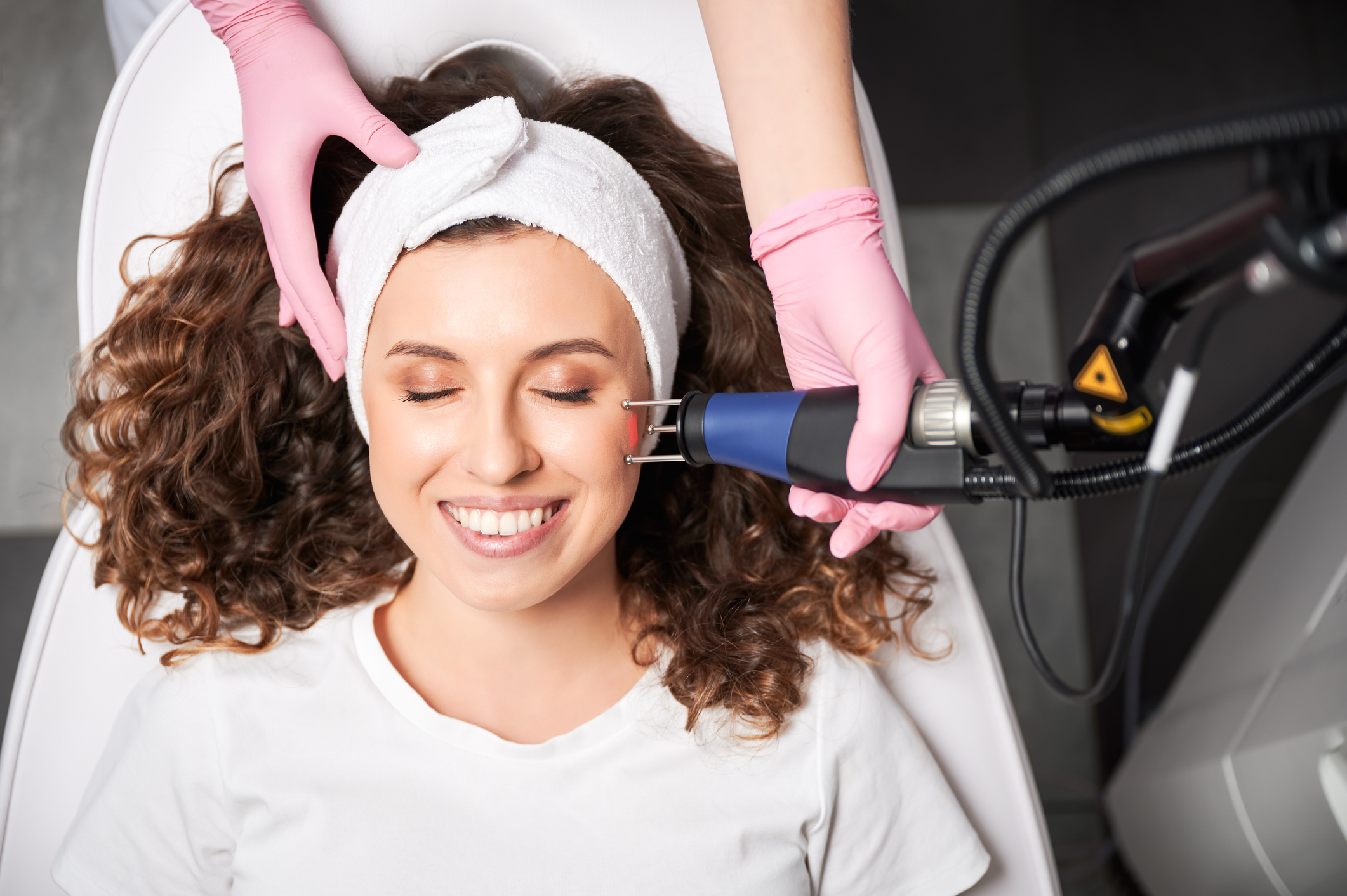
Ablative vs. Non-Ablative Fractional Laser: Which Treatment Is Right for You?
If HIFU is the tool for deep structural lifting, fractional laser is the clinical gold standard for everything on the surface: texture, tone, fine lines, and pigmentation. It’s one of the most versatile anti-aging treatments available in a clinic setting, and after three decades of clinical use, it has one of the strongest evidence bases in aesthetic dermatology.
The catch is that “fractional laser” isn’t a single treatment. There are two fundamentally different types, and choosing the wrong one for your skin concern, skin tone, or lifestyle can lead to disappointing results or unnecessary downtime.
What You’ll Learn:
- How fractional laser technology works
- The key difference between ablative and non-ablative types
- Which mainstream treatments exist and what each does best
- What to expect before, during, and after treatment
- How to decide which type suits your skin
- How fractional laser fits with HIFU and other treatments
The Concept That Changed Laser Treatments
Before fractional lasers, the standard approach was full-surface resurfacing — treating the entire skin surface at once with ablative laser energy. Results were dramatic, but healing was slow, and the risk of complications was significant.
The fractional approach changed this. Instead of treating the entire surface, fractional lasers deliver energy through thousands of microscopic columns, called micro-treatment zones, leaving the skin between those columns completely intact. Those untreated zones act as healing reservoirs, dramatically accelerating recovery while still triggering meaningful collagen remodeling in the treated columns.
The result is a much better risk-to-reward ratio: clinically significant skin improvement with a fraction of the downtime of earlier laser resurfacing methods.
Two Types, Very Different Experiences
All fractional lasers use this micro-column approach, but they differ in one critical way: whether they remove tissue at the surface or leave it intact.
Ablative fractional lasers physically vaporize microscopic columns of tissue at and below the skin surface. This creates a stronger wound-healing response, more significant collagen remodeling, and more dramatic results, but it also means visible healing: redness, swelling, and peeling for several days post-treatment.
Non-ablative fractional lasers heat the tissue within those microscopic columns without removing the surface layer. The skin surface stays intact, healing is faster, and side effects are milder, but the stimulus for collagen production is less intense, which typically means more sessions are needed to achieve comparable results.
A useful way to think about it: ablative is a more intense intervention that delivers bigger results from fewer sessions; non-ablative is a gentler, more gradual approach suited to those who cannot afford extended downtime or are newer to laser treatments.
The right choice depends entirely on your skin concern, skin type, and how much downtime fits your schedule.
The Mainstream Treatments at a Glance
| Treatment | Type | Best For | Sessions Needed | Downtime |
|---|---|---|---|---|
| Fractional CO2 (e.g., SmartXide, Lumenis) | Ablative | Deep wrinkles, significant texture, sun damage, laxity | 1–2 | 5–7 days |
| Fractional Er:YAG (e.g., Sciton Contour) | Ablative | Moderate wrinkles, superficial resurfacing | 2–4 | 3–5 days |
| Fraxel Restore (1550nm/1927nm) | Non-ablative | Fine lines, pigmentation, texture improvement | 3–5 | 2–3 days |
| Clear + Brilliant | Non-ablative | Prevention, maintenance, early aging, first laser | 4–6 | 1 day |
What the Research Shows
The clinical evidence for fractional laser is among the strongest in aesthetic dermatology. Here’s what studies consistently show:
For ablative fractional CO2:
- Wrinkle reduction of up to 58% in depth and size in the cheek area and 35% around the eyes after a treatment series
- Improvement in photodamage rated good to excellent in 92% of subjects, with pore size and skin laxity improvements in 79%
- 93% of patients satisfied with treatment outcomes for periorbital wrinkles after a single session in one prospective study
- New collagen formation confirmed on histological biopsy even after a single treatment session
For non-ablative fractional (Fraxel):
- Significant improvement in skin texture, pigmentation, enlarged pores, and overall appearance confirmed across multiple controlled trials
- Dermal thickness improved measurably from an average of 1.15mm to 1.30mm after three monthly non-ablative sessions
- Side effects limited to transient redness and mild flaking in most patients, with no serious adverse events in large retrospective studies
For Clear + Brilliant:
- Clinically proven improvement in skin tone and texture across multiple sessions
- Patients consistently report smoother skin, reduced pore appearance, and a more radiant complexion after 3 to 6 sessions
- Ideal as a maintenance treatment between more intensive sessions or as a starting point for those new to lasers
What to Expect Before, During, and After
Before your session:
- A thorough consultation to assess skin type, Fitzpatrick scale, and suitability is essential
- Stop using retinoids, exfoliating acids, and certain medications (including some antibiotics) for one to two weeks beforehand
- Avoid significant sun exposure for at least two weeks prior
During the session:
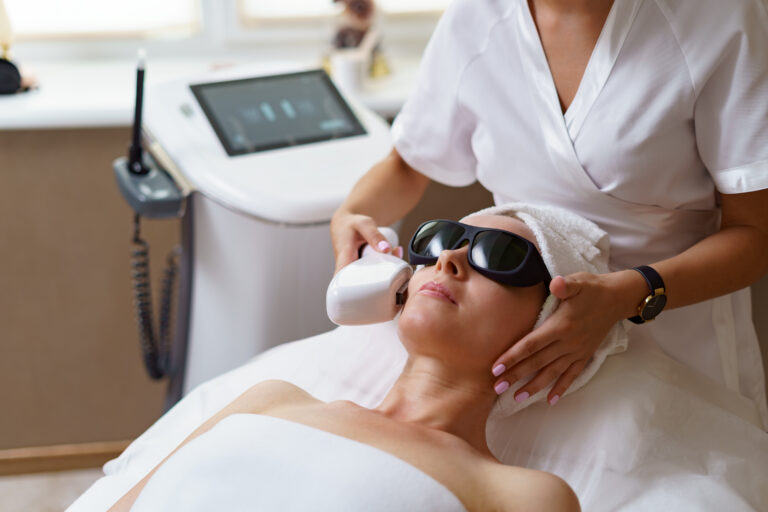
- Topical numbing cream is applied 30 to 60 minutes before treatment
- Discomfort ranges from mild warmth (non-ablative) to a more intense heat sensation (ablative); most patients tolerate it well
- Sessions typically last 20 to 45 minutes depending on the treatment area and type
After treatment:
- Ablative: expect redness, swelling, and visible peeling for 5 to 7 days; skin will look raw initially before revealing fresh, smooth skin underneath
- Non-ablative: mild redness and a sandpaper texture for 2 to 3 days (Clear + Brilliant as little as one day); makeup is usually possible within 24 to 48 hours
- Rigorous sun protection is non-negotiable post-treatment; new collagen and fresh skin cells are highly vulnerable to UV damage
- Early improvements appear within 2 to 4 weeks; peak collagen remodeling and full results develop over 3 to 6 months
Choosing the Right Type for Your Skin
Use this as a starting framework when consulting with your practitioner:
- Significant texture, deep wrinkles, or sun damage → ablative fractional CO2 or Er:YAG
- Fine lines, uneven tone, or moderate pigmentation → non-ablative Fraxel (1550nm/1927nm)
- Early aging, prevention, or first laser experience → Clear + Brilliant
- Maintenance between more intensive sessions → Clear + Brilliant
- Darker skin tones (Fitzpatrick III–VI) → non-ablative is strongly preferred; ablative treatments carry a higher risk of post-inflammatory hyperpigmentation and require an experienced practitioner with proven expertise in darker skin
One important note for all skin types: always seek a consultation from a qualified, experienced practitioner before booking. The operator’s skill level and device calibration are significant factors in both safety and results.
Where Fractional Laser Fits in the Bigger Picture
Fractional laser and HIFU address entirely different layers of aging skin, which makes them highly complementary rather than competing treatments.
HIFU lifts and tightens at the structural level — the deep dermis and SMAS layer. Fractional laser refines what’s on the surface: texture irregularities, pigmentation, fine lines, and epidermal quality. Together, they address aging comprehensively from the inside out. Most practitioners recommend spacing them at least 4 to 6 weeks apart.
Between sessions, maintaining results with daily SPF, retinoids, and consistent skincare preserves the collagen remodeling that both treatments work hard to stimulate.
Conclusion
Fractional laser is one of the most versatile and well-evidenced treatments in aesthetic dermatology. The key is not choosing the most powerful option available, it’s choosing the right type for your specific concern, skin tone, and lifestyle. A non-ablative starting point with Clear + Brilliant or Fraxel makes sense for many people, while ablative CO2 delivers more dramatic results when the skin concern justifies it.
References
- “Efficacy of a New Fractional CO2 Laser in the Treatment of Photodamage and Acne Scarring.” https://pubmed.ncbi.nlm.nih.gov/20666827/
- “Fractional Carbon Dioxide Laser Resurfacing of Rhytides and Photoageing: A Prospective Study Using Profilometric Analysis.” https://pubmed.ncbi.nlm.nih.gov/24372002/
- “Efficacy and Safety of Ultra-Pulsed CO2 Fractional Laser for Periorbital Static Wrinkles.” https://pubmed.ncbi.nlm.nih.gov/39954149/
- “Nonablative Fractional Diode Laser Resurfacing (1440nm): Clinical Outcomes and Patient Satisfaction.” https://pmc.ncbi.nlm.nih.gov/articles/PMC11623373/
- “Expert Consensus on Clinical Recommendations for Fractional CO2 Laser.” https://pmc.ncbi.nlm.nih.gov/articles/PMC11776446/