Botox and Dermal Fillers Explained: Results, Longevity, and What to Expect
Botox and dermal fillers are the two most performed aesthetic treatments in the world. They are also the two most frequently confused. People often assume they are variations of the same thing, or use the names interchangeably. They are not the same. They work through different mechanisms, treat different types of aging, and suit different concerns. Understanding the distinction is the single most useful thing you can know before considering either.
What You’ll Learn:
- What Botox actually is and how it works at the cellular level
- What dermal fillers are and the different types available
- Key differences between the two treatments
- What results to realistically expect and how long they last
- What to consider before booking and what the risks are
- How they fit alongside devices and other treatments
Two Treatments, Two Completely Different Mechanisms
Here is the clearest way to separate them: Botox relaxes muscles. Fillers restore volume.
That’s it. Everything else follows from that distinction. Botox targets the underlying muscle activity that causes certain types of wrinkles to form. Fillers physically fill areas where volume or structure has been lost. They address different causes of aging, in different ways, often in different parts of the face. (Read more about the root science of skin aging here.)
Many people benefit from both, used together as a complementary strategy. But using one when you need the other will always produce underwhelming results.
How Botox Works
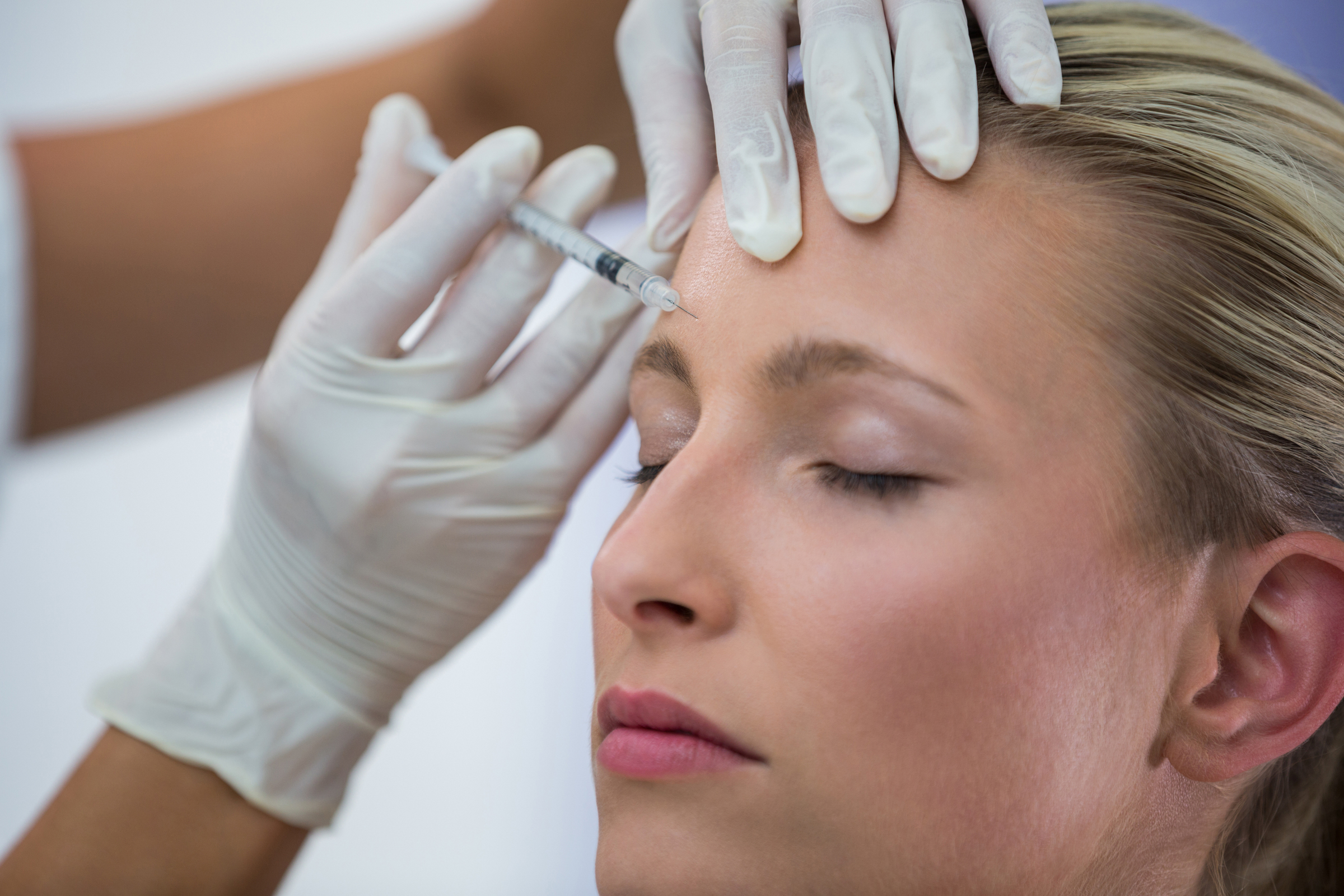
Botox is the brand name for botulinum toxin type A, a purified protein derived from Clostridium botulinum bacteria. In aesthetic use, it is injected in very small, precisely calibrated doses directly into targeted facial muscles.
The mechanism is straightforward: botulinum toxin temporarily blocks the release of acetylcholine at the neuromuscular junction, the chemical signal that tells a muscle to contract. With that signal interrupted, the muscle cannot contract fully, and the overlying skin stops being pulled into repeated folds.
The result is a visible softening of the lines those muscle movements create. Onset typically begins within 3 to 5 days, with full effect visible at the two-week mark. Results generally last 3 to 4 months before the nerve signaling gradually recovers and muscle activity returns.
The main brands — Botox (Allergan), Dysport, Xeomin, and Jeuveau — all use botulinum toxin type A as their active ingredient but differ slightly in formulation, diffusion profile, and onset speed. The clinical differences between them are modest for most patients.
Botox works best for:
- Forehead lines
- Frown lines between the brows (glabellar lines)
- Crow’s feet around the eyes
- Bunny lines on the nose
- Brow lifting and subtle facial contouring
Botox does not address: static wrinkles present at rest, volume loss, or skin laxity. For those concerns, a different treatment is needed.
How Dermal Fillers Work
Dermal fillers are injectable gel substances that physically add volume, lift, and structural support to areas where tissue has been lost or softened with age. Unlike Botox, which acts on the muscle, fillers work at the level of the skin and deeper facial tissue.
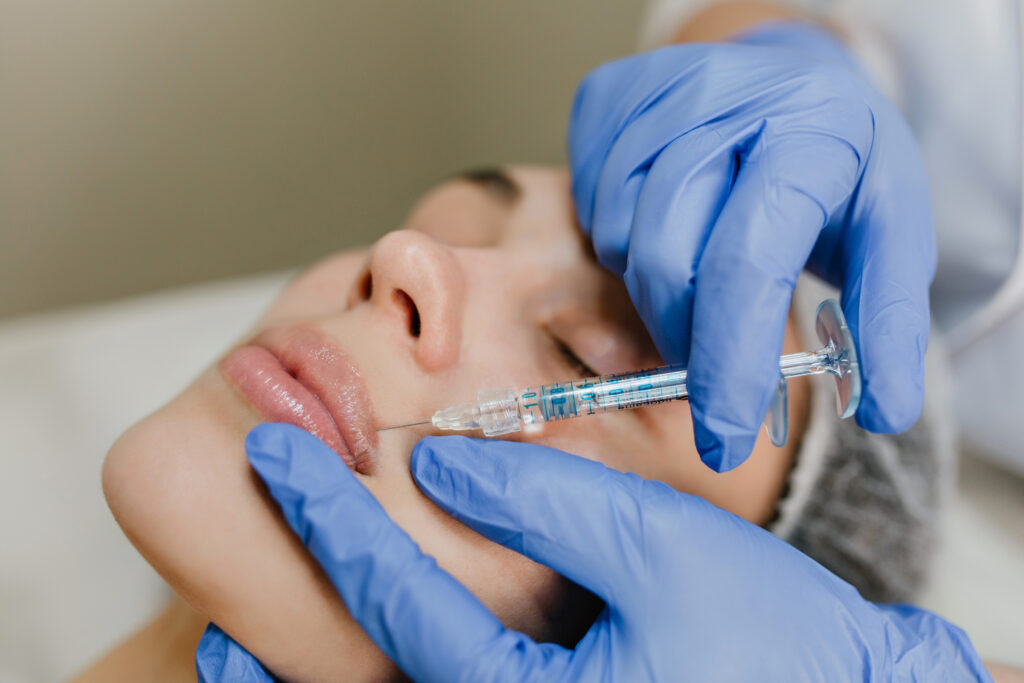
The most widely used type is hyaluronic acid (HA) fillers — brands include Juvederm and Restylane. Hyaluronic acid is a naturally occurring molecule in the body, which makes HA fillers highly biocompatible and well-tolerated. A critical advantage is reversibility: HA fillers can be dissolved with an enzyme called hyaluronidase if results are unsatisfactory or a complication occurs.
Results are typically immediate, with minor swelling resolving within one to two weeks to reveal the final outcome. Duration varies by product formulation and treatment area, generally ranging from 6 to 18 months.
Other filler types serve specific purposes:
- Calcium hydroxylapatite (Radiesse) for deeper structural support and mild collagen stimulation
- Poly-L-lactic acid (Sculptra) for gradual, diffuse collagen stimulation over multiple sessions rather than immediate volume
- PMMA-based fillers for longer-lasting correction (not reversible)
Fillers work best for:
- Nasolabial folds (smile lines)
- Loss of cheek volume and projection
- Under-eye hollows (tear troughs)
- Lip volume and definition
- Jawline and chin definition
- Temple hollowing
Side-by-Side: Key Differences
| Botox | Dermal Fillers | |
|---|---|---|
| Mechanism | Relaxes muscles | Restores volume |
| Best for | Dynamic wrinkles | Static wrinkles, volume loss |
| Results onset | 3–5 days | Immediate |
| Duration | 3–4 months | 6–18 months |
| Reversible | Wears off naturally | HA fillers reversible; others not |
| Main risk | Temporary ptosis (drooping) if misplaced | Bruising, vascular occlusion (rare) |
What the Research Shows
Both treatments have decades of clinical evidence behind them, making them among the best-studied aesthetic interventions available.
For Botox, a Cochrane systematic review confirmed it is significantly more effective than placebo for reducing facial wrinkles, with a well-established safety profile across large patient populations. A 2026 systematic review and meta-analysis of 1,903 patients found overall patient satisfaction of 94%, with sustained results and minimal complications. Research also supports its use as a preventive strategy: starting conservative doses in the 30s has been shown to slow the formation of static wrinkles over time by reducing repetitive muscle creasing.
For HA fillers, large-scale prospective studies consistently confirm high efficacy for volume restoration and wrinkle correction lasting 12 to 18 months, with a safety profile rated as good to excellent in the overwhelming majority of patients. The most common adverse events across both treatments are bruising, temporary swelling, and mild discomfort — all transient and self-resolving.
Serious complications are rare but real. For Botox, the primary risk is temporary ptosis (eyelid or brow drooping) if the toxin migrates to an unintended muscle — this resolves as the product wears off. For fillers, the most serious risk is vascular occlusion, accidental injection into or compression of a blood vessel, which requires immediate intervention. This risk is why practitioner qualification is crucial.
Before You Book: What to Consider
A few things worth knowing before committing to either treatment:
Choose the right practitioner. Both Botox and fillers are medical treatments that carry real risks when performed incorrectly. Select a qualified medical professional, a doctor, dermatologist, plastic surgeon, or credentialed aesthetic nurse prescriber, with a verifiable track record and appropriate training. Be cautious of unusually low pricing, practitioners who skip a proper consultation, or anyone who cannot clearly explain what they are injecting and why.
Know the contraindications. Neither treatment is appropriate during pregnancy or breastfeeding. Botox is not suitable for those with certain neuromuscular conditions. Fillers should not be used in areas with active infection or inflammation. Disclose all medications at consultation — some anticoagulants increase bruising risk significantly.
Less is more. The goal of both treatments is natural enhancement, not dramatic transformation. Starting conservatively allows you to assess how your face responds and build from there.
Space with energy-based treatments. If you are also using devices such as HIFU, RF, or fractional laser, wait at least two weeks after injectables before undergoing energy-based treatments to allow full integration of the product.
How Injectables Fit in the Bigger Picture
Injectables and device-based treatments are complementary rather than competing. They address different aspects of aging:
- Botox handles dynamic muscle-driven wrinkles
- Fillers restore structural volume
- HIFU lifts and tightens at the deep structural level
- RF and microcurrent rebuild collagen and tone
- Fractional laser refines surface texture and pigmentation
- Red light therapy supports ongoing cellular repair
Used together thoughtfully, this approach addresses aging comprehensively in a way no single treatment can achieve alone.
Conclusion
Botox and fillers are among the most effective anti-aging tools available, but only when matched to the right concern and performed by the right hands. The most common mistake is choosing a treatment based on popularity rather than suitability. Understanding what each one actually does makes it far easier to have an informed conversation with a practitioner and arrive at a plan that genuinely works for your face and your goals.
References
- “Botulinum Toxin Type A for Facial Wrinkles.” https://pmc.ncbi.nlm.nih.gov/articles/PMC8407355/
- “Evaluating the Preventive Role of Botulinum Toxin in Facial Aging.” https://pmc.ncbi.nlm.nih.gov/articles/PMC12372128/
- “Beyond Wrinkles: A Systematic Review and Meta-analysis of Botulinum Toxin Type A.” https://pubmed.ncbi.nlm.nih.gov/41604510/
- “A Systematic Review and Comparative Analysis of Botox Treatment.” https://pmc.ncbi.nlm.nih.gov/articles/PMC11427080/
- “Efficacy and Safety of Two Resilient Hyaluronic Acid Fillers in Nasolabial Folds.” https://pubmed.ncbi.nlm.nih.gov/32217842/
- “Effectiveness, Safety, and Versatility of Hyaluronic Acid Dermal Filler.” https://pmc.ncbi.nlm.nih.gov/articles/PMC12362359/
- “The Safety Profile of a Portfolio of Hyaluronic Acid-Based Soft Tissue Fillers.” https://pmc.ncbi.nlm.nih.gov/articles/PMC12842927/
- “Efficacy and Safety of a New Resilient Hyaluronic Acid Dermal Filler.” PMC. https://pmc.ncbi.nlm.nih.gov/articles/PMC7384057/