Retinoids vs. Anti-Aging Devices: How to Combine Them Safely
Retinoids and anti-aging devices are often framed as competing answers to the same problem. They are not. They work differently, one biochemical and one physical, which is exactly why the right combination can outperform either approach alone.
The catch is that they should not all be layered the same way. Some device categories pair easily with a retinoid routine. Others need spacing, especially when the skin is adjusting, heat is involved, or the skin barrier has been temporarily disrupted. Understanding the distinction makes the difference between a routine that accelerates results and one that causes unnecessary irritation.
What You’ll Learn:
- What retinoids actually are and how they work at the cellular level
- Why retinoids and at-home devices are complementary, not redundant
- Which devices pair smoothly and which need spacing
- A practical weekly sequencing example
- The most common mistakes that cause irritation or blunt results
How Retinoids Work
Retinoids are vitamin A derivatives that bind to retinoic acid receptors in the skin, influencing cell proliferation and differentiation. In anti-aging applications, their primary value lies in three mechanisms:
- Increasing epidermal cell turnover,
- Inhibiting collagen-degrading enzymes (MMPs)
- Stimulating new collagen synthesis — particularly type I procollagen
Not all retinoids are the same”
- Tretinoin (prescription only) is the most studied and has the strongest clinical evidence for photoaging.
- Retinaldehyde sits in the middle of the potency spectrum.
- Retinol is the most widely available OTC option, but it requires enzymatic conversion in the skin before becoming active, making it less potent than tretinoin at equivalent concentrations.
The trade-off is tolerability — retinol and retinaldehyde are typically easier on the skin, particularly for beginners.
Side effects are real and dose-dependent: dryness, redness, peeling, and what’s known as retinoid dermatitis are common early on, especially with prescription-strength tretinoin. This irritation profile is the central reason why device timing matters when building a combined routine.
Why Devices Are Not Redundant
At-home anti-aging devices target aging through physical rather than biochemical mechanisms. They are doing a different job entirely.
- Red light/LED therapy uses specific red and near-infrared wavelengths to support cellular repair and collagen signaling at the mitochondrial level, with minimal surface disruption
- Microcurrent devices deliver low-level electrical stimulation intended to tone facial muscles and support skin cell energy (ATP) production
- Radiofrequency (RF) devices heat the deeper dermis to stimulate collagen and elastin remodeling. Devices such as the CurrentBody Skin RF work by consistently delivering controlled thermal energy to the skin
- At-home microneedling (derma rollers and stamps) creates controlled micro-injury at the skin’s surface, triggering a wound-healing collagen response and temporarily increasing the skin’s permeability to topical ingredients
The combined picture: retinoids are the ongoing biochemical layer of a routine, accelerating cell renewal and building collagen over weeks and months. Devices add a second, independent mechanism targeting firmness, stimulation, or collagen remodeling from the physical side. They are not alternatives to each other; they address different rungs of the same ladder.
Which Devices Pair Well, Which Need Spacing
Red Light / LED Therapy
Compatibility: High
Red light and near-infrared devices do not generate significant surface heat and do not mechanically disrupt the skin barrier. This makes them the most straightforward category to incorporate alongside a retinoid routine. Many users apply their LED session and retinoid on the same evening, though the general recommendation is to use red light therapy first on bare, clean skin before applying retinoids, rather than on top of a freshly applied active.
Microcurrent
Compatibility: High to Moderate
Microcurrent devices use low-level electrical current for facial stimulation and are not thermal or barrier-disrupting in the same way that RF or microneedling are. They can typically sit in the same weekly routine as a retinoid without significant conflict. The main consideration is avoiding microcurrent sessions on skin that is already visibly reactive, peeling, or compromised from retinoid adjustment — pushing current through an already-irritated barrier is counterproductive.
At-Home Radiofrequency (RF)
Compatibility: Moderate — space sessions apart
At-home RF devices work by heating the skin, which is precisely the category that needs sequencing care alongside retinoids. Retinoids already increase skin sensitivity and can thin the stratum corneum slightly during the adjustment phase. Adding heat-based stimulation on a night when the skin has recently been exposed to retinoids, or is currently dry and sensitized from them, compounds that stress unnecessarily. Keep RF sessions and retinoid application on separate evenings, especially in the first few months of using either.
At-Home Microneedling
Compatibility: Low without spacing — pause retinoid around sessions
At-home microneedling is the category that requires the most caution. The microchannels created by derma rollers or stamps temporarily increase the skin’s permeability, which is part of why combining microneedling with topical products can enhance ingredient penetration. But that same mechanism cuts both ways: applying retinoids to freshly needled skin can lead to significant over-penetration and irritation. The general guidance is to pause retinoid use for at least 48 hours before and after a microneedling session, and to allow the skin barrier to fully recover before resuming.
Device Compatibility at a Glance
| Device | How It Works | Retinoid Compatibility | Practical Guidance |
|---|---|---|---|
| Red light/LED (e.g., Omnilux, CurrentBody LED) | Red and near-infrared wavelengths, no significant heat | High | Can sit in the same weekly routine; use red light before applying retinoid |
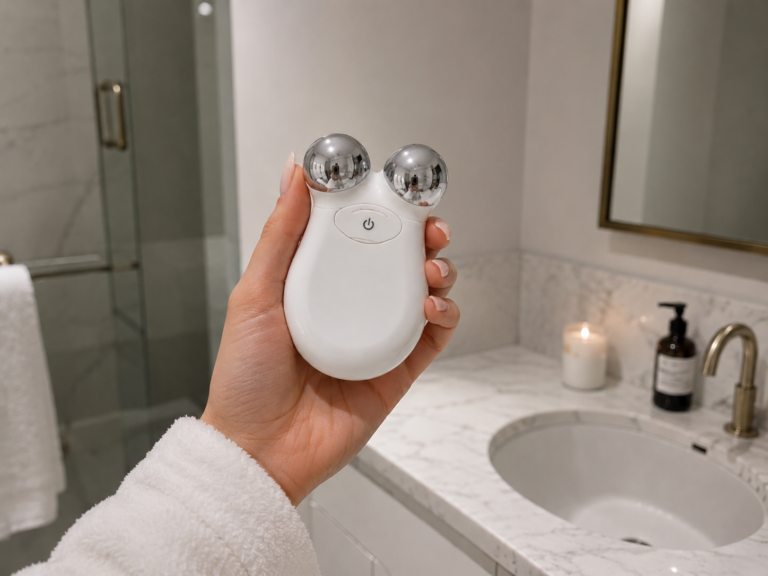
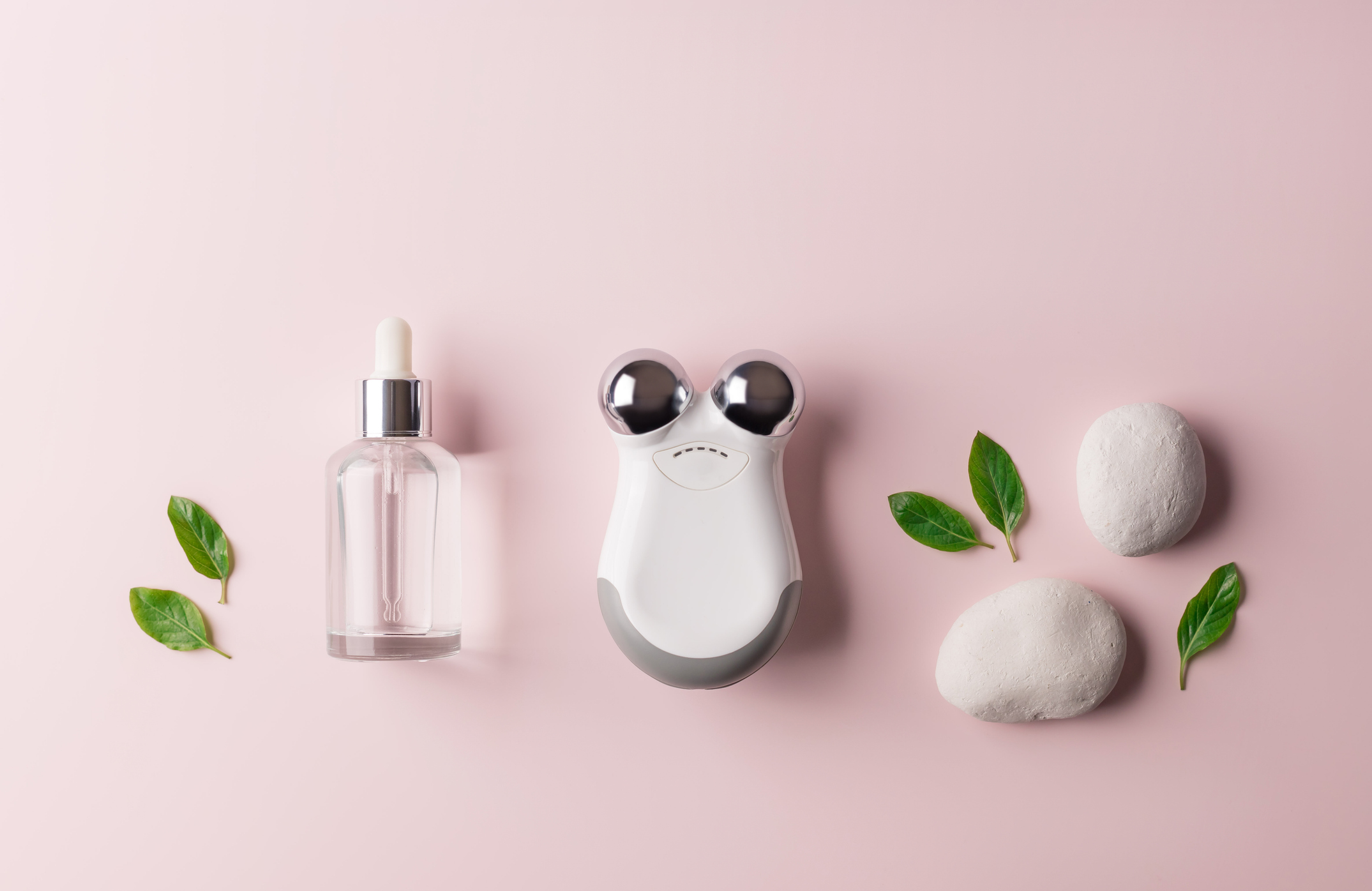
| Microcurrent (e.g., NuFACE, ZIIP) | Low-level electrical facial stimulation | High to moderate | Compatible alongside retinoids; avoid on visibly reactive skin |
| At-home RF (e.g., CurrentBody RF, TriPollar Apollo) | Thermal energy to dermis for collagen remodeling | Moderate | Keep RF sessions on separate evenings from retinoid application |
| At-home microneedling (e.g., Beauty Bioscience GloPRO) | Controlled microinjury, increased topical penetration | Low without spacing | Pause retinoid at least 48 hours before and after needling sessions |
A Practical Weekly Sequencing Example

The simplest principle: treat retinoids as your base program and devices as structured add-ons. Retinoids require consistency over weeks, not intensity on any single night. The problems tend to arise when too many variables are introduced at once.
A sample weekly structure for someone using both retinoids and at-home devices:
- Monday: Retinoid night
- Tuesday: Red light session or microcurrent
- Wednesday: Retinoid night
- Thursday: Recovery night — moisturiser only, no actives or devices
- Friday: RF session (skin calm, no retinoid the night before)
- Saturday: Retinoid night (if skin is calm and not reactive)
- Sunday: Full rest night
This is not the only valid structure — individual skin tolerance varies. The underlying logic is consistent: keep heat and barrier disruption separated from retinoid nights, and include genuine recovery time in the weekly plan.
If you are new to retinoids, build tolerance first before layering devices. Someone who starts tretinoin, RF, and microneedling in the same week will have no clear way of identifying the source of any irritation that follows.
Common Mistakes
Treating all devices as interchangeable. Red light, microcurrent, RF, and microneedling do not behave the same way and should not receive identical sequencing guidance. The compatibility rules differ because the mechanisms differ.
Introducing too many variables at once. Starting a retinoid and a new device on the same week means any adverse reaction cannot be traced to a specific cause. Introduce one change at a time, establish tolerance, then add the next layer.
Applying RF on retinoid nights. Heat-based RF on recently sensitised skin is the most common source of unnecessary irritation in combined device-and-retinoid routines. They are both valuable, just not on the same evening.
Skipping SPF. Retinoids specifically increase photosensitivity, and that risk does not disappear on the days between retinoid applications. Daily broad-spectrum SPF is not optional in any routine that includes a retinoid. Combined with energy-based device use, sun protection becomes even more important.
A Note on Clinical Treatments
The guidance above applies to at-home devices that consumers manage themselves. Clinical-grade treatments — such as professional HIFU, Ultherapy, or in-clinic fractional laser — operate at significantly higher energy levels and require a practitioner to manage retinoid pause and resume timing on your behalf. If you are undergoing clinical energy treatments alongside an at-home retinoid routine, always follow your treating clinician’s specific pre- and post-treatment instructions, which typically involve pausing retinoids for longer windows than the at-home sequencing guidelines above.
Conclusion
Retinoids and at-home devices are two different tools addressing different parts of the same anti-aging strategy. Retinoids handle the ongoing biochemical layer: cell renewal, collagen stimulation, and surface quality improvement over time. Devices handle the physical layer: energy-based collagen remodeling, muscle stimulation, and targeted structural support.
The key to getting both right is sequencing: understanding which categories need spacing, keeping heat-based sessions on separate nights from retinoid application, and giving the skin genuine recovery time. Done correctly, this combination covers more ground than either approach alone and does so without unnecessary irritation.
References
- “Use of Retinoids in Topical Antiaging Treatments: A Focused Review of Clinical Evidence” https://pmc.ncbi.nlm.nih.gov/articles/PMC9618501/
- “A Clinician’s Guide to Topical Retinoids.” https://pmc.ncbi.nlm.nih.gov/articles/PMC8750127/
- “A Comprehensive Review of the Strategies to Reduce Retinoid Irritation.” https://pmc.ncbi.nlm.nih.gov/articles/PMC11344648/
- “Microneedling in Dermatology: A Comprehensive Review.” https://pmc.ncbi.nlm.nih.gov/articles/PMC11499218/
- “A Systematic Review Examining the Potential Adverse Effects of Microneedling.” https://jcadonline.com/examining-potential-adverse-effects-microneedling/