Vitamin C for Skin Aging: How to Choose a Formula That Stays Effective
What You’ll Learn:
- Why vitamin C form, concentration, packaging, and storage can all affect a formula’s performance
- How L-ascorbic acid differs from common vitamin C derivatives
- Why the strongest vitamin C serum is not always the best choice for your skin
- What color changes can, and cannot, tell you about a serum’s stability
- How to choose a vitamin C formula that fits into a long-term anti-aging routine
Vitamin C serums have become a staple in many anti-aging routines. They are often marketed as a simple answer for dullness, dark spots, fine lines, and loss of radiance. But after trying one, many people are left wondering why their skin has not changed much, or why the serum stings, pills under sunscreen, or turns darker before the bottle is finished.
The issue is not always vitamin C itself. It is often the formula. Two products can both say “vitamin C” on the label while using different forms, concentrations, textures, pH levels, packaging, and stabilizing systems. Those differences can affect how well the product holds up over time, how it feels on the skin, and whether you can use it consistently enough to see a benefit.
The best vitamin C formula is not necessarily the strongest one. It is the one that stays stable, suits your skin, and fits naturally into your routine.
Vitamin C Can Support Aging Skin, But It’s Not a Shortcut
Topical vitamin C has earned its place in skincare for good reason. It acts as an antioxidant, helping the skin manage some of the oxidative stress created by UV exposure and pollution. It also plays a role in collagen-related processes and can support a more even-looking tone over time.
That makes it a useful option for people concerned about early signs of photoaging, dullness, or lingering uneven pigmentation. It can also complement other anti-aging actives rather than needing to carry an entire routine on its own.
Still, vitamin C has limits.
It will not replace sunscreen, erase deep wrinkles, lift sagging skin, or fade every dark spot quickly. Results tend to be gradual, and they depend on consistent use, the rest of the routine, skin type, and the quality of the formula itself.
A review of topical vitamin C and the skin in the Journal of Clinical and Aesthetic Dermatology describes vitamin C’s antioxidant, collagen-supporting, and anti-pigmentary roles, while also highlighting the challenge of creating formulas that remain stable and can reach the skin effectively. The last point is important. Vitamin C can be a valuable ingredient, but it is also one of the more demanding ingredients to formulate well.
Vitamin C Is Not One Ingredient
When a product says “vitamin C,” it may refer to pure L-ascorbic acid or to one of several vitamin C derivatives. They all belong to the vitamin C family, but they do not behave in exactly the same way.
| Vitamin C type | Potential advantage | Main consideration |
|---|---|---|
| L-ascorbic acid | The most biologically active and extensively studied topical form | Can be unstable and may irritate some skin types |
| Vitamin C derivatives | Often designed to improve stability or create gentler formulas | Performance can vary depending on the derivative and the full formula |
L-ascorbic acid is the form most often associated with classic vitamin C serums. It is the best studied in topical skincare and is commonly used in formulas designed for visible photoaging, uneven tone, and antioxidant support.
However, it has trade-offs. L-ascorbic acid is sensitive to oxygen, heat, light, and water. It is also often formulated at a low pH, which can make it more likely to sting on dry, reactive, or already irritated skin.
Vitamin C derivatives are modified forms intended to help improve stability, texture, or skin tolerance. Common examples include ascorbyl glucoside, sodium ascorbyl phosphate, magnesium ascorbyl phosphate, 3-O-ethyl ascorbic acid, and tetrahexyldecyl ascorbate.
A derivative is not automatically better, weaker, or more effective than L-ascorbic acid. Its usefulness depends on the particular derivative, the product’s delivery system, the concentration, and how well your skin tolerates the formula.
For someone with resilient skin who wants a classic antioxidant serum, L-ascorbic acid may be a good fit. For someone whose skin becomes red or uncomfortable with acidic products, a gentler derivative may be easier to keep using over time.
Strength Is Only One Part of a Good Formula
It is easy to compare vitamin C serums by percentage. A 20% serum can sound more impressive than a 10% one, but concentration is only one part of the equation.

A higher percentage does not guarantee better results. It may also bring more stinging, dryness, flaking, or irritation, especially if the formula is acidic or if your routine already includes retinoids, exfoliating acids, or stronger treatments.
For L-ascorbic acid, the formula’s pH matters because an acidic environment can help support stability and skin delivery. But lower pH can also make the product harder for sensitive skin to tolerate.
The product base matters, too. Vitamin C can be delivered through lightweight water-based serums, creams, emulsions, oils, and anhydrous formulas. These formats can differ in texture, stability, and how they layer with moisturizer or sunscreen.
A 2022 review on ascorbic acid in anti-aging skincare explains that pure ascorbic acid is easily oxidized and difficult to deliver through the skin barrier. That is why formulators use approaches such as anhydrous systems, emulsions, encapsulation, and vitamin C derivatives.
The takeaway is simple: a serum that feels comfortable enough to use regularly may be more valuable than a stronger product that spends most of its life unopened in a drawer.
Stability Starts With Packaging and Storage
Vitamin C formulas do not stay fresh forever. This is particularly true for water-based L-ascorbic acid serums, which can become less stable after repeated exposure to air, light, warmth, and moisture. Packaging can make a big difference.
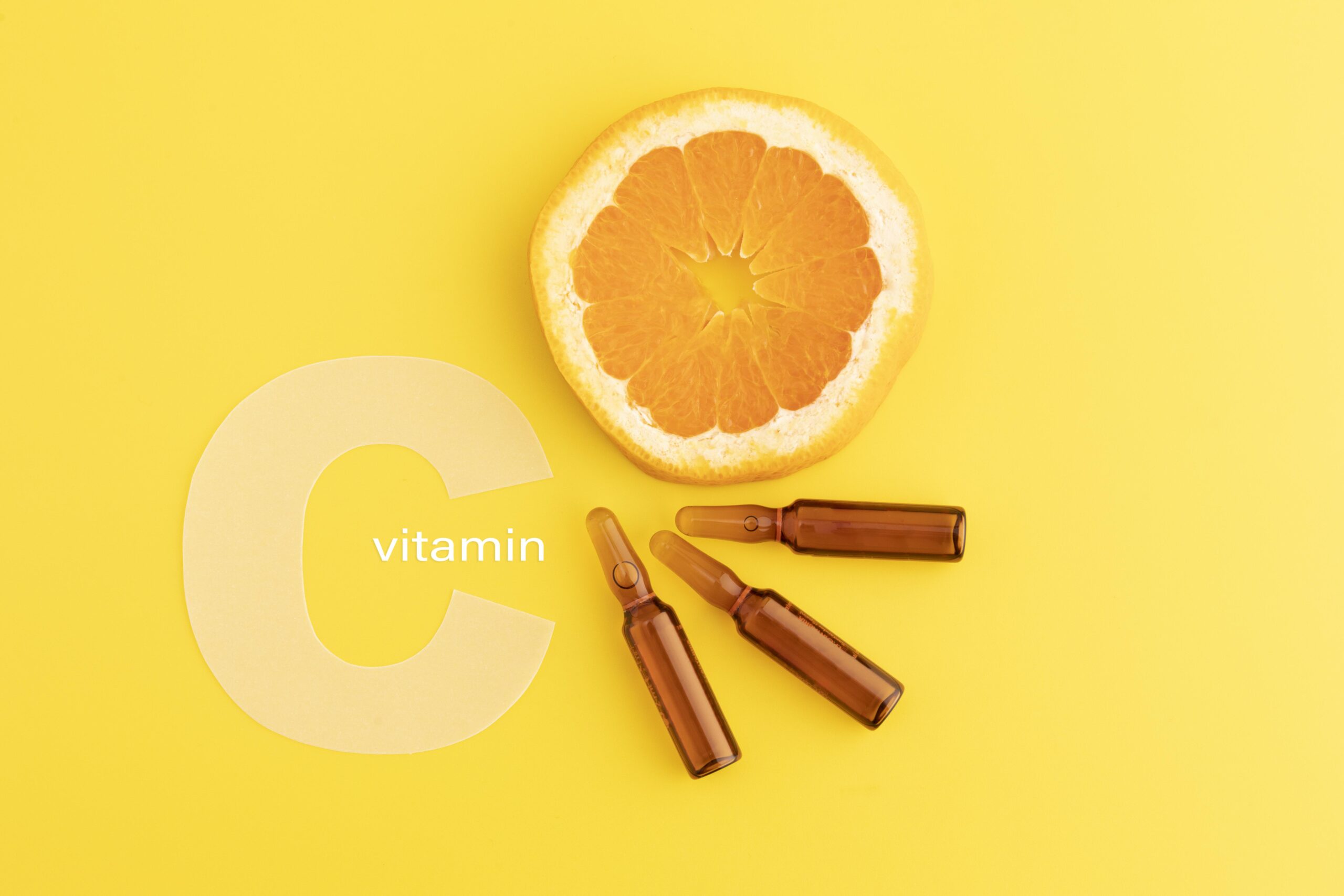
Dark or opaque bottles help limit light exposure. Airless pumps can reduce repeated contact with oxygen. Single-dose ampoules and smaller bottles may also be useful for people who do not finish a full-size serum quickly.
Storage matters as well. Leaving a serum on a bright windowsill, in a hot car, or in a humid bathroom can make it less likely to stay stable throughout its intended use period. It is usually best to follow the brand’s specific storage instructions.
Color changes often make people nervous, but they should be interpreted carefully. A slight tint may be normal depending on the formula and its other ingredients. A noticeable shift in color, smell, or texture may be a reason to check the brand’s guidance or replace the serum, especially if it has become much darker than when first opened. But color alone cannot tell you exactly how much active vitamin C remains, because formulas vary widely.
Instead of looking for one “good” or “bad” color, pay attention to the whole picture: the product’s age, storage conditions, packaging, scent, texture, and the manufacturer’s instructions.
Choose a Formula Around Your Skin and Routine
The right vitamin C formula depends on what your skin can handle consistently.
| Your main concern | A reasonable starting point | Keep in mind |
|---|---|---|
| Fine lines, sun-related dullness, or uneven tone | A well-formulated L-ascorbic acid serum, if your skin tolerates it | Start every other morning if you are new to acidic vitamin C |
| Sensitive, dry, or reactive skin | A gentler vitamin C derivative in a moisturizing formula | More comfort can mean better long-term consistency |
| A routine with retinoids, acids, or devices | A lower-strength option or a gentler derivative | Introduce only one new active product at a time |
| A serum that layers under makeup and SPF | A lightweight formula that does not pill | Texture and compatibility matter as much as ingredients |
| A habit of not finishing products quickly | Small bottles, ampoules, or airless packaging | A large bottle is not always better value if it degrades before you use it |
If your skin is dry, reactive, or adjusting to other actives, gentler options may make more sense. Pairing vitamin C with barrier-supportive ingredients such as niacinamide can also help create a routine that feels more balanced.
If a serum causes persistent redness, burning, or peeling, it is not a sign that the product is “working harder.” It may simply be too strong, too acidic, or poorly suited to your current skin condition.
Vitamin C Works With Sunscreen, Not Instead of It
Vitamin C is especially popular in morning routines because it can layer under sunscreen and support the skin’s antioxidant defenses during the day. But it is not a substitute for SPF.
Vitamin C does not absorb UVA or UVB radiation, so it cannot function as a sunscreen. Its value lies in helping address some oxidative stress associated with UV exposure, which is why it can be a useful partner to, not a replacement for, daily sunscreen.
If protecting collagen and preventing uneven tone are your main goals, sun protection still does the heavier lifting.
Morning vitamin C followed by broad-spectrum sunscreen is a simple approach for many people. Nighttime use can also work if that is easier for your routine. The best timing is usually the one you can maintain.
Using Vitamin C Alongside Retinoids
Vitamin C and retinoids are often treated as a difficult pairing, but many people use both in the same overall routine without a problem.
A simple setup is vitamin C in the morning and a retinoid at night. This does not mean they can never be used in the same routine, but separating them can make it easier to identify what is causing irritation if your skin becomes sensitive.
If you are new to both ingredients, introduce one first. Give your skin a few weeks to adjust before adding the other. The same applies if you are beginning exfoliating acids or a more intensive at-home treatment plan.
When combining retinoids and anti-aging devices, a simpler routine is often easier to manage. You do not need to add every active ingredient at once to make progress.
The Best Formula Is the One You Will Keep Using
A good vitamin C formula does not need to be the highest strength, the most expensive product, or the one with the longest ingredient list.
Look for a formula that suits your skin type, is packaged with stability in mind, layers comfortably with sunscreen, and feels easy to use day after day. If that means choosing a gentler derivative instead of a strong L-ascorbic acid serum, that can still be a smart choice.
Vitamin C works best as part of a bigger routine: daily sun protection, consistent hydration, and a few well-chosen actives that your skin can tolerate. The goal is not to find a perfect serum. It is to build a routine that your skin and your schedule can live with.