
IPL vs. Laser for Sun Spots: Which Treatment Fits Your Skin?
For many scattered sun spots and an uneven complexion, IPL is often the more practical starting point. For a few distinct brown spots, a pigment-targeting laser is usually the more focused option. This distinction depends on treatment coverage and targeting. The goal isn’t to find one technology that clears more pigment for everyone.
IPL and laser treatments can both produce substantial improvement. Your skin tone and the identity of the spots determine whether either belongs on your shortlist.
What You’ll Learn
- When IPL makes more sense for scattered sun spots and when a targeted laser may be the better choice
- How your skin tone and the type of pigmentation influence treatment
- What to expect from treatment sessions, results, and visible recovery
- How to care for your skin afterward and reduce the chance of sun spots returning
First, Identify the Brown Spots
Sun spots, also called age spots or solar lentigines, are persistent pigmented marks associated with accumulated ultraviolet exposure. They commonly appear on the face and other sun-exposed areas. Unlike freckles that fade noticeably in winter, sun spots tend to remain year-round.
Confirmed solar lentigines are benign, and treating them is optional. But some brown marks require a professional visit: a changing or unusual lesion needs assessment before removal because some skin cancers can resemble an age spot.
Melasma is another important distinction: it typically causes blotchy facial pigmentation rather than distinct spots, and IPL or laser can trigger worsening or relapse. If the diagnosis is melasma, the treatment plan should address that condition instead of treating it as ordinary sun damage.
Once the marks have been identified as common age spots, you can start comparing IPL and laser options.
How IPL and Lasers Work
Both treatments use light energy absorbed by pigment. The difference is how they deliver that energy.
IPL Treats a Broader Field
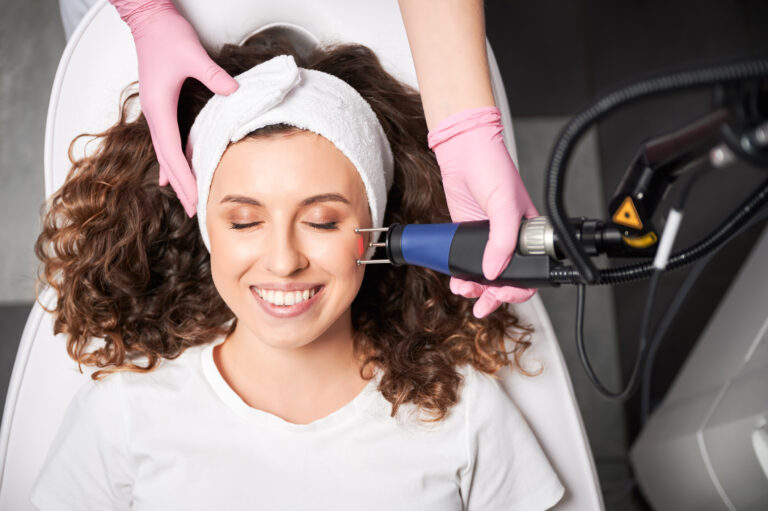
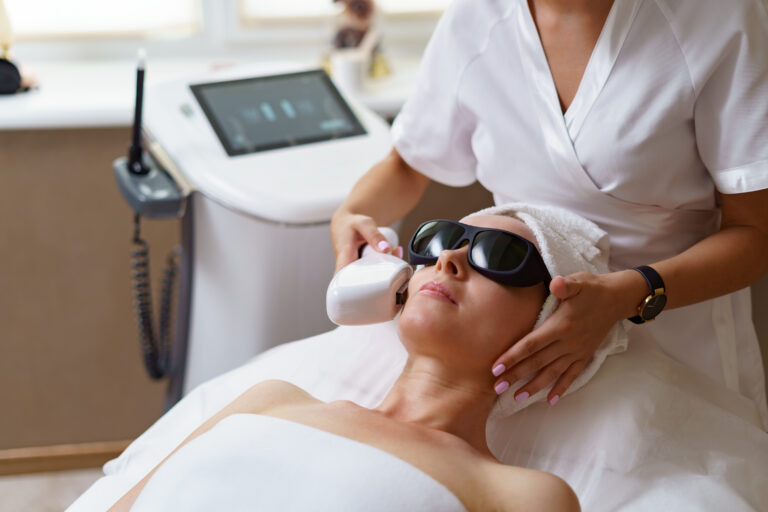
Intense pulsed light uses a range of wavelengths, narrowed by filters to suit the target. Melanin absorbs the light and converts it to heat, helping reduce the appearance of brown spots.
Its treatment window covers an area containing multiple marks, making IPL well suited to broader complexion improvement. Depending on the settings, it can also treat visible blood vessels and redness—useful when sun damage leaves a mix of brown and red discoloration.
Pigment Lasers Target Selected Spots
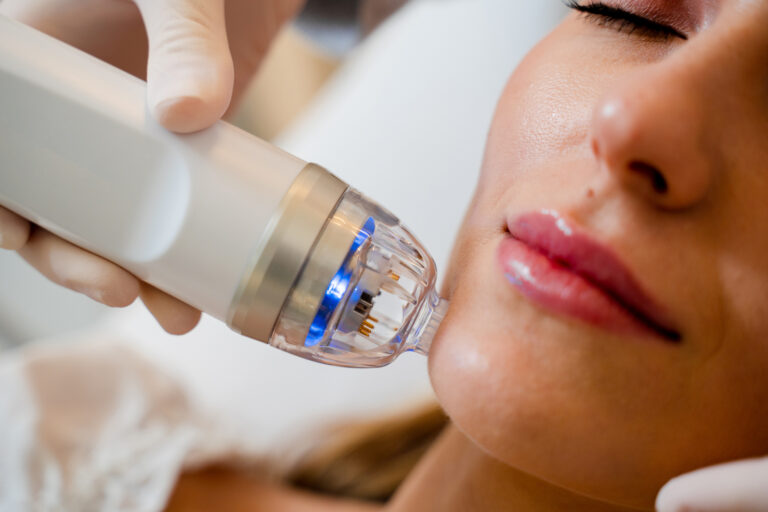
A pigment laser delivers short pulses at a specific wavelength that disrupt pigment-containing structures. Q-switched and picosecond lasers are two commonly discussed options (their names describe how they deliver pulses).
For example, some Nd:YAG laser systems provide a 532 nm wavelength used for superficial pigmented lesions. Picosecond systems deliver even shorter pulses, emphasizing mechanical pigment disruption while limiting heat spread.
An important note is that a pigment laser is not the same as full-face resurfacing: treating selected brown spots doesn’t necessarily involve the broader tissue treatment used for wrinkles or scars.
When IPL Is the Better Fit
If you have numerous small sun spots across your cheeks, plus visible redness around your nose, your goal isn’t to erase marks one by one. Instead, aim for a more even, better complexion.
That is where IPL has its clearest advantage. It can address multiple superficial marks across a treatment area, with the option to treat accompanying vascular discoloration.
IPL is therefore worth discussing when:
- Brown spots are scattered across a larger area.
- Overall uneven tone matters more than one particular lesion.
- Redness or visible small vessels are also part of the concern.
- A series of appointments fits your schedule.
The benefit is coverage and versatility. Choosing IPL isn’t settling for an ineffective version of laser treatment. It’s a different way to approach a broader problem.
When Laser Is the Better Fit
Now picture a few sharply defined spots against otherwise fairly even skin. Treating the entire face would be unnecessary. A pigment-targeting laser offers a direct way to work on the lesions that bother you.
For isolated sun spots, targeted laser treatment deserves a strong place on the shortlist, particularly when the priority is clearing specific marks with fewer visits.
The American Society for Dermatologic Surgery (ASDS) notes in its guidance on pigmented lesions that Q-switched lasers may require only one or two sessions while IPL may need more visits. It also carries a lower risk of post-inflammatory darkening in some circumstances.
Picosecond lasers are another effective option: a 2025 study of solar-lentigo treatments found encouraging results for both picosecond lasers and IPL, with some direct laser comparisons favoring picosecond treatment. Ask a professional about this treatment option.
IPL vs. Laser at a Glance
| Your main concern | What to consider/discuss | Why |
|---|---|---|
| Many superficial sun spots across the face | IPL | Efficient coverage of multiple marks within a treatment area. |
| Brown spots alongside visible redness | IPL | Can address pigment and vascular discoloration with suitable settings. |
| A few distinct brown spots | Pigment-targeting laser | Focused treatment of selected lesions. |
| Fewer treatment visits | Pigment-targeting laser | Some spots respond within one or two sessions. |
| Darker skin or persistent marks after inflammation | Specialist assessment first | Avoiding additional discoloration becomes central to treatment selection. |
| Pigmentation plus wrinkles or rough texture | Broader discussion of resurfacing | Pigment correction alone may not meet the full goal. |
If texture is also a major concern, ablative and non-ablative fractional lasers are another treatment option. For a small number of sun spots alone, however, broader resurfacing may be more intervention than you need.
Skin Tone Can Change the Choice
The surrounding skin contains melanin too, so treatment energy can affect normal pigment as well as the unwanted spot, causing burns or darker and lighter patches. Skin color and recent tanning are therefore important treatment considerations.
This is why “IPL is gentler” does not mean “IPL is suitable for everyone.” Switching to a laser doesn’t solve the problem either: wavelength, energy settings, and the practitioner’s experience matter.
There is the possibility of lasting pigment loss in skin of color. If minor injuries or previous treatments have left persistent marks, bring that history to the consultation.
For these readers, choosing a professional experienced with your skin condition is important. A slower, skincare-led approach may also be preferable.
Sessions, Results, and Recovery
Expect improvement to develop through healing, not immediately after the sessions.
IPL commonly involves a course of visits spaced several weeks apart. Solar-lentigo studies have included three to five sessions, although some spots improve after a single treatment. Targeted pigment lasers can clear selected age spots in one or two visits, while more gradual laser approaches require longer courses.
Both can temporarily darken treated spots. IPL-treated pigment may darken and peel over roughly five to seven days. Pigment lasers can produce superficial crusting and a similar shedding period.
That means a treatment can involve little interruption to daily activities while still leaving visible marks. Plan around your social calendar and your ability to return to work.
During healing, keep skincare simple: gentle cleansing, use the recommended moisturizer or ointment, and sun protection. Avoid picking or scrubbing off pigment, and pause exfoliating acids and retinoids for the period the clinic specifies.
Compare costs across the expected course. Ask what area, follow-up, and additional sessions the quote includes.
Can Sun Spots Return?
A successfully treated spot may clear, but neither procedure makes skin immune to future sun damage. Existing spots can recur, and new ones can develop.
After age-spot treatment, use broad-spectrum, water-resistant SPF 30 or higher, along with shade and protective clothing. Maintenance matters, no matter which device you choose.
Topical treatments remain useful, especially if you prefer gradual fading or aren’t a good candidate for light-based procedures. Prescription creams and, in selected cases, chemical peels offer alternatives worth discussing.
Conclusion
Before committing, ask the clinician to name the spots, explain how the treatment works, and estimate the number of visits and visible recovery time. A good recommendation should connect those details to your actual goal: a more even complexion, clearance of a few marks, or improvement in several signs of sun damage.