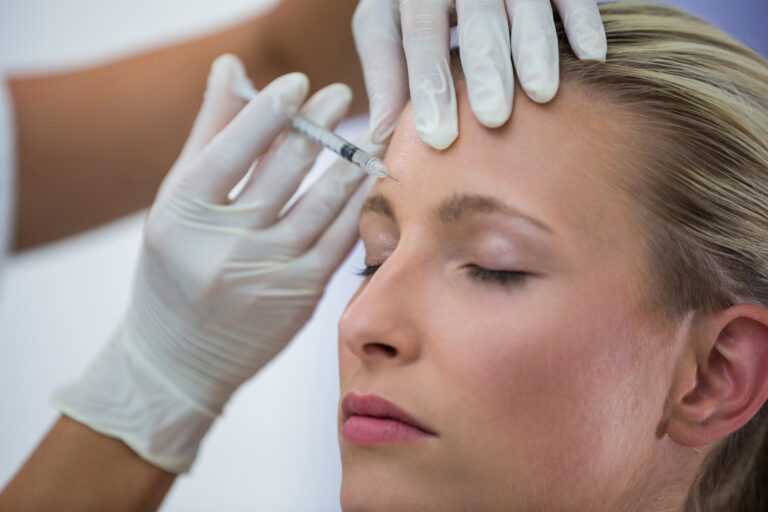

Loose Skin or Lost Volume? Choosing the Right Treatment
What You’ll Learn:
- How loose skin, lost fullness, and tissue descent affect facial appearance
- Why hollow cheeks and a heavier lower face can develop together
- Which treatments address firmness, volume, or tissue position
- Where home beauty devices fit into the picture
- What to ask before choosing a treatment
Your cheeks look flatter, the folds beside your mouth seem deeper, or your jawline has become less defined. It is easy to describe all of this as “sagging” and start looking for something that tightens. Yet facial aging involves several layers, from the underlying bone and fat to the skin above them. Reduced fullness, looser skin, and shifts in tissue position can create similar-looking concerns and often happen together.
Understanding those differences can help you make sense of treatment claims. A procedure that improves skin firmness may do little for hollow cheeks, while adding volume will not necessarily address excess skin. Start by identifying what has changed.
Less Firmness, Less Fullness
Skin laxity and volume loss describe different changes. Laxity concerns the skin’s firmness and elasticity; volume loss concerns the fullness and support beneath it. Tissue descent adds another dimension: where facial soft tissues sit.
| Change | What happens | What you might notice |
|---|---|---|
| Skin laxity | Skin becomes less firm and elastic | Looser-looking skin, fine creasing, or less resilience. |
| Volume loss | Fullness and deeper structural support diminish | Flatter cheeks, hollow temples, or more prominent contours. |
| Tissue descent | Soft tissues change position | Heavier folds, jowling, or fullness concentrated lower in the face. |
These categories aren’t separate boxes everyone fits into. Someone can retain facial fullness while developing loose skin. Another person may notice hollowing before much visible laxity appears.
Volume also means more than fat. Age-related changes in the facial skeleton alter the support available to the tissues above it. Meanwhile, changes within the skin affect how it drapes over that framework. That layered process is central to how skin and facial structures age.
Why Hollowing and Sagging Coexist
A face can look less full through the cheeks yet heavier around the mouth and jawline. This is not necessarily contradictory.
Facial fat is arranged in compartments that change differently over time. Research on age-related facial fat loss shows that deeper and more superficial compartments do not lose volume equally. Changes in fullness, support, and tissue position together affect the contours we see.
For example, reduced midface fullness can coexist with deeper folds and lower-face heaviness. Simply adding volume wherever a fold appears may overlook tissue descent, and treating only the skin can leave the underlying hollowing unchanged.
That is why “tightening vs. filling” isn’t always an either-or decision. The balance between the two, and whether either is appropriate, depends on the area, anatomy, and degree of change.
What Your Mirror Can Show
You don’t need to identify every anatomical change yourself. Describing what bothers you clearly is more useful than trying to diagnose it.
Perhaps your temples look hollower, your cheeks seem flatter, or your jawline has become uneven. You might notice fine creases, a deeper shadow beside the mouth, or a change that became more apparent after weight loss. These observations give a practitioner a specific place to start.
Older photographs can help explain the difference, especially when the angle, expression, and lighting are reasonably similar. Focus on the feature that has changed rather than comparing your entire face to an idealized photograph from years ago.
Pulling your cheeks upward or pinching the skin can’t reliably tell you which treatment you need. Moving one area changes several tissues at once, while the visible result may reflect changes across multiple layers. Use the mirror to identify your concern, not to decide how much filler, energy, or lifting it requires.
Choosing Treatment by the Concern
A useful treatment discussion separates three goals: improving firmness, restoring fullness, and repositioning tissue. Some treatments affect more than one aspect of appearance, but they don’t achieve these goals equally.
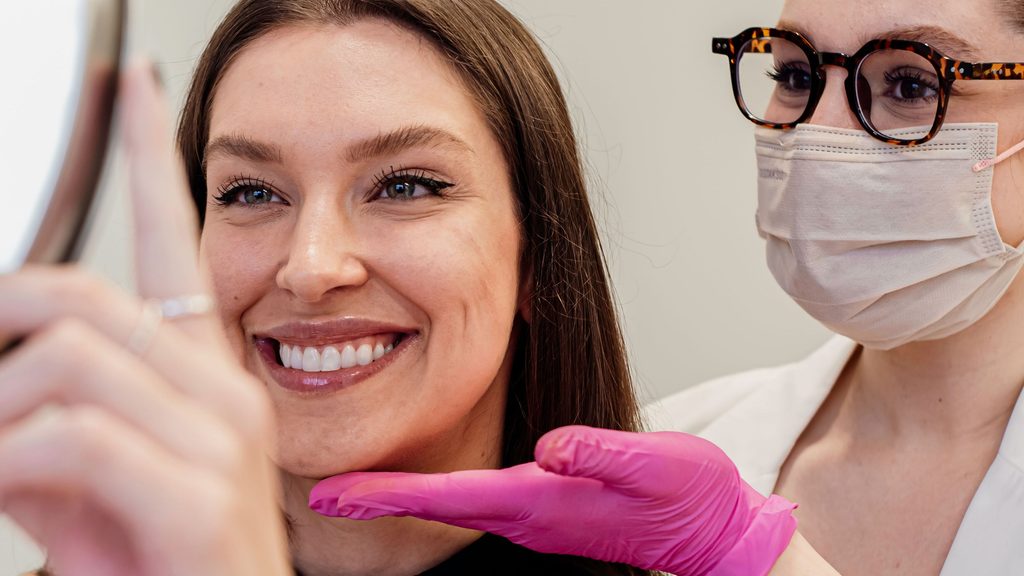
Improving Skin Firmness
Radiofrequency, focused ultrasound, and select laser procedures can tighten the skin by delivering controlled energy. According to the AAD, nonsurgical tightening usually produces modest improvement, and its suitability depends partly on the amount of laxity present. The intended outcome matters. Smoother fine lines or improved skin texture can be worthwhile without a substantial lift.
Radiofrequency skin tightening and HIFU also belong in this discussion, but their suitability depends on the device, treatment depth, settings, and individual anatomy. Don’t look at them as interchangeable solutions for every loose-looking area.
Restoring Lost Fullness
When hollowing or reduced fullness is prominent, volume-restoring treatments are more relevant. Dermal fillers can restore fullness in selected areas, including the cheeks and certain facial hollows.
Keep the purpose clear: replace an appropriate amount of volume where needed, rather than adding product until the whole face looks tighter. Substantial excess skin or tissue descent requires a separate assessment. More fullness doesn’t eliminate those concerns.
It also helps to distinguish fillers from Botox. Although often discussed together, Botox is not a volume-replacement treatment. Biostimulators offer another approach by stimulating collagen production. Timing, effects, and suitability vary by product, so they shouldn’t be treated as equivalent to conventional fillers or lifting procedures.
Facial fat transfer also uses fat collected from elsewhere on the body to restore fullness. Unlike an injectable filler appointment, fat grafting involves harvesting and transferring tissue, with recovery considerations at both the donor and treatment areas. Some transferred fat is absorbed, making the final amount of retained volume less predictable.
When deciding, evaluate the deficit location, desired change, medical suitability, and willingness to accept recovery and maintenance.
Repositioning Descended Tissue
When tissue descent and excess skin are substantial, surgery may be more relevant than repeated nonsurgical tightening.
A facelift addresses sagging facial tissues, while a neck lift targets neck-focused concerns. Volume replacement and surface treatments can still serve separate purposes. Repositioning tissue doesn’t necessarily correct every hollow or surface wrinkle.
This explains why some surgical plans include fat transfer or fillers, and why a person can have several treatment goals without needing every available procedure. Each addition should address an identifiable concern.
Thread lifts may also be discussed for selected cases, but their degree of correction and durability shouldn’t be equated with a surgical facelift. Understanding those limits matters more than whether a treatment is described as “minimally invasive.”
Where At-Home Devices Fit
Home devices are best considered in terms of the specific changes they have been studied to produce. Softer-looking wrinkles, smoother texture, and improved apparent firmness differ from replacing lost facial volume or repositioning descended tissue.
For example, the shift toward at-home laser treatment gives consumers more options for ongoing home care, but it doesn’t make every facial concern a home-device problem. A device’s value depends on whether its supported outcome matches what you want to change.
Before committing to months of use, ask: Am I looking for better skin quality, more fullness, or a change in facial contour? Keeping that goal specific makes it easier to judge whether the routine is worthwhile.
Questions for a Consultation
A good consultation should explain the likely cause of your concern and the limits of the proposed treatment. Useful questions include:
- What contributes most to this change—skin laxity, lost volume, tissue descent, or a combination?
- Which part would this treatment improve, and what would remain unchanged?
- Could it affect fullness in an area I want to preserve?
- How noticeable is the expected improvement, and how long might it last?
- What maintenance, recovery, and risks should I consider?
- What are my alternatives, including leaving the area untreated?
You don’t need to pursue every visible change. The goal is to determine whether the proposed result matters to you and is proportionate to the time, cost, and risks involved.
Frequently Asked Questions
Can volume loss make skin look loose?
Yes. Reduced fullness and structural support beneath the skin can make it look looser or more folded. However, visible looseness can also involve changes in skin elasticity and tissue position, so replacing volume alone may not address it.
Can fillers tighten loose skin?
Fillers restore fullness and can improve contours affected by volume loss. They do not remove excess skin, and substantial laxity or tissue descent should be assessed separately rather than treated by continually adding volume.
Can you have both laxity and volume loss?
Yes, and the combination is common in facial aging. The right approach depends on how skin, fat, support, and tissue position contribute to the concern—not just age.