Horizontal Neck Lines: What Skincare, Devices, and Injections Improve
Horizontal neck lines respond to treatment, but results depend on what’s making them noticeable. Skincare improves dryness and fine texture. Devices can gradually improve wrinkles and firmness. Hyaluronic acid injections have direct research supporting improvement in persistent horizontal creases, while Botox is better established for vertical muscle bands.
The challenge is choosing a treatment that addresses what bothers you. Smoother skin across the neck won’t necessarily leave every crease less visible, and reducing a crease won’t correct substantial sagging. This article explains what each approach improves, how results develop, and what to ask before spending on treatment.
What You’ll Learn
- Moisturizer and retinoid-based skincare help with fine lines and rough, crepey texture.
- Research supports home LED treatment for gradual improvement in neck wrinkles.
- Professional lasers and RF microneedling improve aspects of neck aging, but neither has been shown to be the better choice for horizontal lines.
- Selected hyaluronic acid injections soften established creases, with results that require maintenance.
- Vertical neck bands and significant loose skin may require different treatment options.
Which Neck Concern Do You Have?
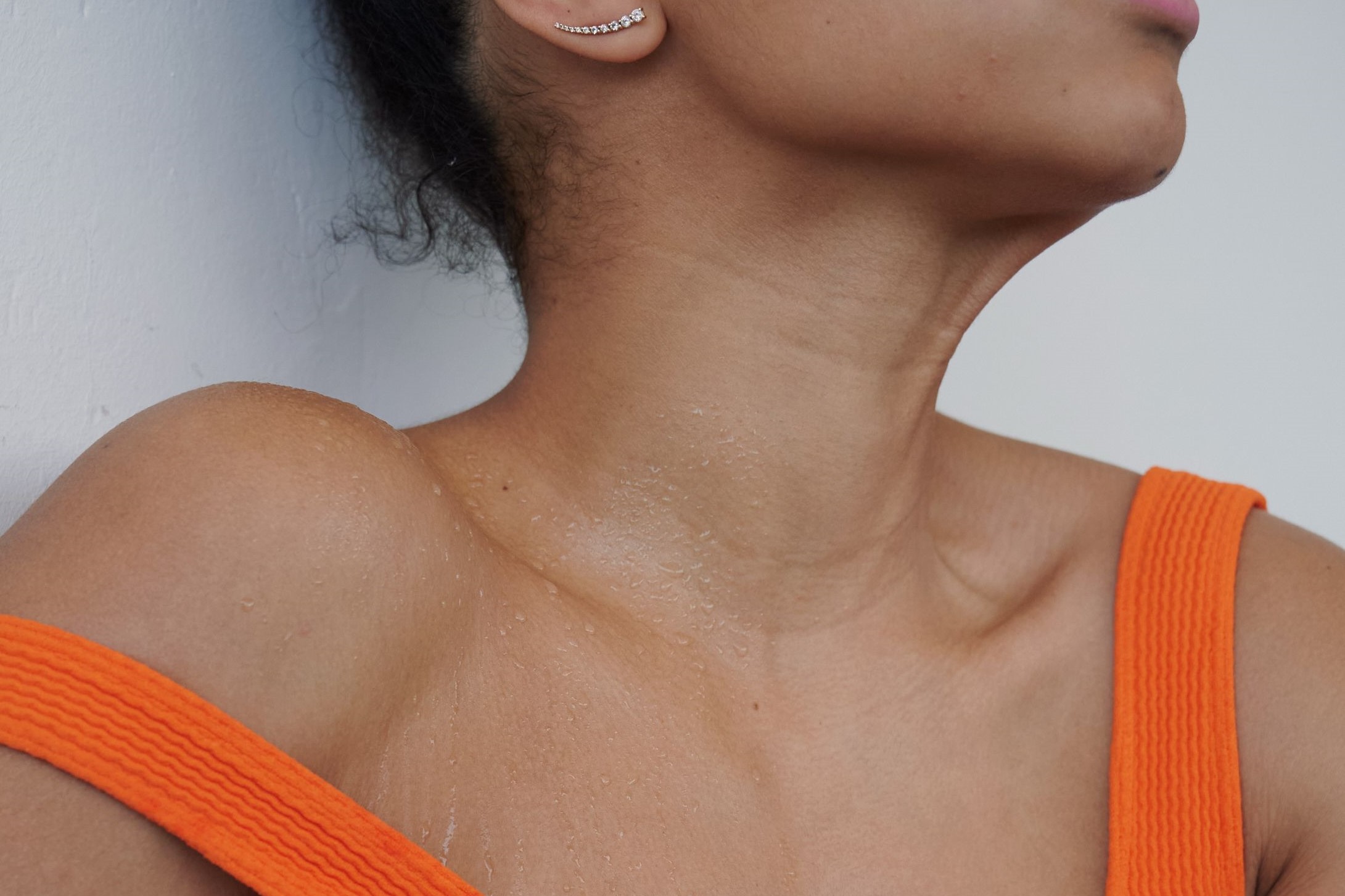
Four problems tend to get lumped together as neck aging: horizontal creases, crinkled and crepey texture, loose or sagging skin, and vertical bands. Most necks have a mix, but treatments rarely fix all four. Studies measure them separately, so a result like “improved neck appearance” says little about whether the creases changed.
This article stays with the creases and the skin around them. Sagging that needs surgery and under-chin fullness are separate topics that are not covered here. To tell what you’re dealing with, look at your neck with your head level. Lines still visible there are etched creases, while lines that show up only when you look down are mostly folds.
Why Necklace Lines Form
Repeated folding, sun damage, and age-related skin thinning all contribute. Horizontal lines also appear in younger adults, so they aren’t only a sign of older skin.
“Tech neck” gets most of the blame, and looking down at screens does fold the neck again and again. Research hasn’t shown that phones alone cause the lines, or that better posture reverses one that’s already etched in. Raising your screen to eye level is a good habit, but it won’t undo an existing crease.
Skincare Softens Texture First
Sunscreen is the one product every neck needs, since sun damage keeps adding to lines that are already there. A good moisturizer that keeps skin comfortable helps fine lines look smoother, and it addresses the dryness that makes them stand out. If your lines look worse some days than others, dryness is usually part of it, and our look at how dryness exaggerates fine lines explains how much a moisturizer can fix.
For something stronger, there’s neck-specific research on retinol. In a study of a cream with retinol and peptides, lines and wrinkles improved by roughly 15%, while crepiness and smoothness improved by about 30%. Topical products do more for the texture around a crease than for the crease itself.
Neck skin is thinner and more reactive than facial skin, and about 30% of participants in that study had some irritation. Start slowly, use a retinoid less often than you would on your face. The sequencing advice in our guide to combining retinoids with beauty devices applies here too.
You don’t need a product sold specifically for the neck. A moisturizer or retinoid you already tolerate on your face is a fine place to begin.
Red Light Therapy for Gradual Improvement
Red and near-infrared LED has the best neck-specific research among home anti-aging devices. In a sham-controlled trial of 70 people, investigators rated wrinkles as improved in 77.1% of those who used a home neck device for 12 weeks, compared with 8.6% of those using a dummy device. Sessions ran nine minutes a day, five days a week.
LED suits people who want gentle change over a few months without any recovery. Its results show up gradually, so give it a full 12 weeks before deciding. Home RF devices and home lasers marketed for the neck don’t have comparable research on horizontal lines, so we won’t discuss them here.
Professional Lasers and RF Microneedling
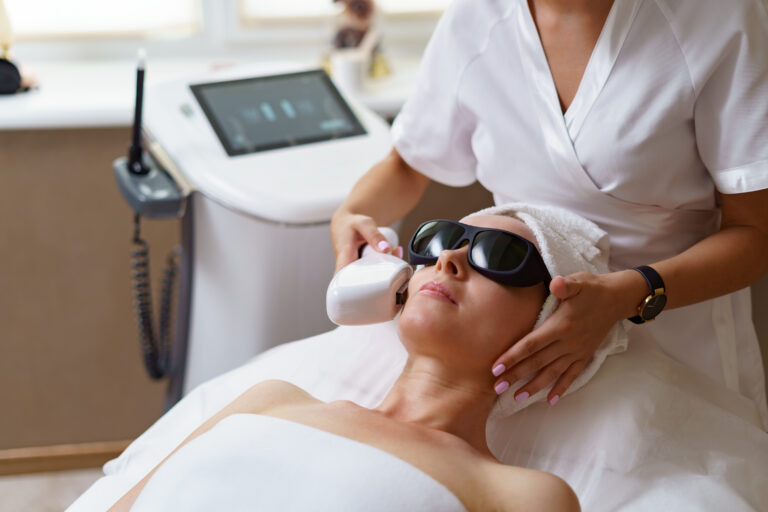
Lasers and RF microneedling stimulate skin remodeling in different ways. A fractional laser delivers light energy into small treatment zones, while RF microneedling uses fine needles to deliver heat into the skin. Both improve wrinkles and texture, but smoother skin across the neck doesn’t always mean the same improvement in horizontal creases.
In a 2022 study, the laser produced better results for overall wrinkling and age-related skin changes. Horizontal neck lines softened in both groups. RF microneedling showed a larger average improvement in those lines, but the study wasn’t strong enough to establish it as the better choice for horizontal creases.
The practical conclusion is that both belong in a discussion about improving neck skin, especially when lines occur alongside crepey texture. The laser performed better for overall rejuvenation in this trial. If you’re mainly concerned about deep horizontal lines, don’t choose either treatment assuming tightening or resurfacing will remove the creases.
Ask the clinician to explain the expected change in your lines separately from improvements in the surrounding skin. That gives you a clearer basis for deciding whether the treatment matches your goal.
Hyaluronic Acid Injections: For Persistent Horizontal Creases
Hyaluronic acid injections are an option when horizontal neck lines remain prominent despite skincare. They soften the creases, and some formulations also improve hydration and skin texture. A review of neck-treatment studies found improvements in wrinkle severity and patient satisfaction across several HA products.
In June 2026, SKINVIVE by JUVÉDERM received FDA approval to reduce neck lines in adults over 21. In the trial supporting approval, about three-quarters of treated participants improved by at least one grade a month after their final initial or touch-up session. Around two-thirds of those assessed still showed that improvement six months later.
These results make HA a reasonable treatment to discuss for established horizontal lines. Before booking, ask which product will be used, how many sessions are expected, and whether a touch-up is included. “Skin booster” is a broad marketing term, and different formulations have different treatment schedules and durability.
Bruising, swelling, and small bumps are common after neck injections. Some settle quickly, while others remain visible for weeks. Allow time to recover, and discuss complications and expected results with your clinician.
Botox: For Visible Muscle Bands
Botox relaxes muscle activity. Its approved neck use is for vertical platysma bands, the cords that become prominent when the neck muscles contract. That makes it a more direct match for muscle bands than for a persistent horizontal crease.
Botox has also been studied for horizontal lines, with some wrinkle-softening benefit. In a randomized comparison, however, a course of HA filling plus mesotherapy produced greater and longer-lasting improvement than a single Botox treatment. The HA combination also involved more discomfort and longer recovery.
Botox is more firmly established for visible vertical bands. If both are present, the clinician should explain which feature each proposed treatment is intended to change.
Choosing a Treatment for Your Neck Lines
Use the feature that bothers you most to guide the decision:
- Dryness, roughness, and faint lines: begin with moisturizer, sunscreen, and a carefully introduced retinoid.
- If you prefer gradual home treatment, consider a neck-specific LED device.
- Lines with widespread crepey texture: discuss professional laser treatment or RF microneedling.
- Persistent, well-defined horizontal creases: ask whether an HA injection is appropriate.
- Vertical bands: discuss botulinum toxin.
- Significant loose skin: seek an assessment focused on laxity, since wrinkle reduction alone won’t address it.
FAQ
Can horizontal neck lines disappear completely?
Treatment usually softens established creases without eliminating every fold. Results depend on line severity, skin quality, and the chosen treatment. Normal neck movement continues after treatment.
Does retinol help neck wrinkles?
Retinol-containing skincare has shown improvements in neck lines, texture, and crepiness over several months. Introduce it slowly and adjust use if irritation develops.
Is Botox or filler better for neck lines?
HA injections have more direct research for horizontal neck lines. Botox is better established for vertical muscle bands. Someone with both may need a plan that addresses each concern separately.
Will changing my posture remove tech neck lines?
Changing posture reduces time spent with the neck folded, but it hasn’t been shown to remove existing creases.