Niacinamide for Wrinkles: Inside the Anti-Aging B3 Derivative
Niacinamide shows up in more skincare products than almost any other active ingredient right now. With that much attention comes an obvious question: does it actually work for anti-aging, or is it just a trendy ingredient riding a marketing wave? We looked past the branding and into the clinical research to find out what niacinamide really does for aging skin.
What You’ll Learn:
- What niacinamide actually is and how it works at the cellular level
- What clinical trials, not marketing claims, show it can do
- How it compares to retinol and vitamin C in mechanism and results
- The concentration research actually used, and why more isn’t necessarily better
- Whether it’s safe to combine with retinoids and vitamin C
Who Benefits Most from Niacinamide?
Niacinamide isn’t a niche ingredient for one skin type. Its broad compatibility is why it shows up in everything from acne serums to anti-aging creams:
- Oily/acne-prone skin — benefits from its oil-regulating and anti-inflammatory effects
- Dry or sensitive skin — benefits from barrier support and reduced redness
- Uneven tone/early pigmentation — sees gradual, visible fading with consistent use
- Nearly all skin types — tolerates it well, making it a common “starting point” active
What Is Niacinamide, and How Does It Work?
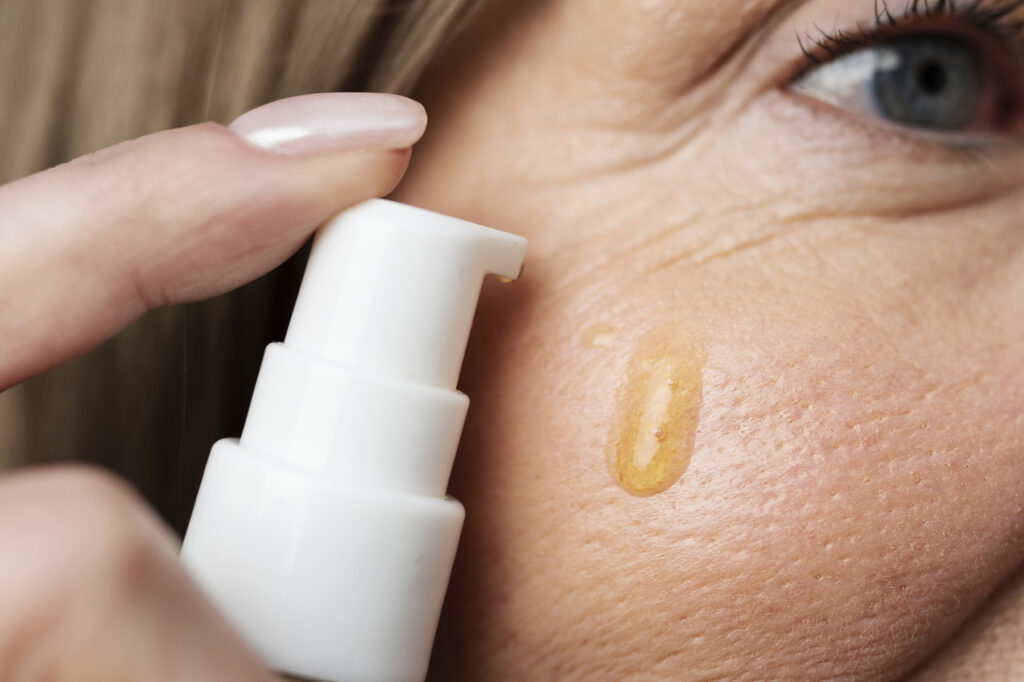
Niacinamide is the water-soluble, active form of vitamin B3. Unlike some ingredients, it has a fairly well-understood mechanism. Inside skin cells, it helps boost cellular energy production and supports DNA repair processes. It also has an anti-inflammatory effect, which is why it calms redness so effectively. On top of that, niacinamide strengthens your skin’s barrier by supporting ceramide production, which means better moisture retention and more resilience against daily irritants. For pigmentation, it works differently than you might expect — rather than blocking melanin production outright, it interrupts the transfer of pigment granules to skin cells, which is why dark spots gradually fade rather than disappearing overnight.
What the Clinical Research Reflects
The niacinamide popularity traces back to real data. A well-known double-blind study split participants’ faces in half, applying 5 percent niacinamide to one side and a placebo to the other over 12 weeks. The niacinamide side showed measurable improvements in fine lines, hyperpigmented spots, redness, and skin yellowing, and elasticity also improved.
Separate clinical trials looked specifically at melasma, a stubborn form of hyperpigmentation. A randomized trial using 4% niacinamide found meaningful improvement in pigmentation over several months. Broader reviews confirm these effects extend beyond aging alone, covering acne, rosacea-related redness, and general barrier repair. Worth being honest about the limits too: evidence for smoothing fine lines and improving tone is strong, while evidence for reversing deep, established wrinkles is more modest compared to prescription retinoids.
Niacinamide vs. Retinol vs. Vitamin C
These three actives get compared constantly because they work through completely different mechanisms:
| Active | Best For | Mechanism | Tolerance |
|---|---|---|---|
| Niacinamide | Redness, oil control, barrier repair, tone | Anti-inflammatory, boosts ceramide production | Excellent — suitable for nearly all skin types |
| Retinol | Deep wrinkles, texture, collagen stimulation | Speeds cell turnover, stimulates collagen | Moderate — can cause dryness/irritation early on |
| Vitamin C | Brightening, antioxidant protection | Neutralizes free radicals, blocks melanin synthesis | Variable — depends on formulation stability |
If you had to pick a starting point for a new routine, niacinamide is usually the safest first step, since it rarely causes the purging or sensitivity that retinol can.
What Concentration Actually Works
A lot of marketing gets misleading here — higher percentages aren’t necessarily better:
- 4-5% — the concentration range used in most clinical trials showing real benefit
- 10%+ — commonly marketed as “stronger,” but with little added clinical benefit and higher risk of flushing
- Paired with ceramides or hyaluronic acid — appears to improve overall results based on formulation research
Can You Combine Niacinamide with Vitamin C and Retinoids?
For years, a persistent myth claimed niacinamide and vitamin C cancel each other out or cause flushing when combined. Modern, stable formulations have largely put that myth to rest. A simple layering approach works for most routines:
- Morning: vitamin C, followed by sunscreen (adds antioxidant protection against daytime stress)
- Evening: niacinamide, layered alongside retinol if your skin tolerates both
- New to actives? Introduce one ingredient at a time so you can track how your skin responds
How to Add Niacinamide to Your Routine
Getting started doesn’t require overthinking it. A simple serum with 4-5% niacinamide, applied once or twice daily after cleansing, is enough to see the benefits shown in clinical studies. Give it time before judging results — most studies measured improvement over 8 to 12 weeks, not days. If your goal is fading dark spots or calming redness, consistency will do more than switching products every few weeks. Pairing it with a basic moisturizer and daily sunscreen rounds out a routine that addresses both prevention and repair.
Side Effects and Who Should Be Careful
Niacinamide has one of the best safety profiles of any active ingredient in skincare. Long-term daily use is generally well tolerated, even in sensitive skin types. The most common side effect is mild, temporary flushing, typically only at higher concentrations. As with any new active, patch testing on a small area first is a smart habit, especially for reactive or highly sensitive skin.
Common Mistakes That Waste Its Potential
- Skipping sunscreen — new sun damage can outpace any pigmentation improvement niacinamide provides
- Expecting overnight results — clinical studies measured effects over months, not days
- Stacking too many high-percentage actives at once — makes it harder to tell what’s actually helping, and raises irritation risk
- Chasing higher percentages — offers little added benefit beyond 4-5%, with more flushing risk
The Bottom Line
Based on the actual research, yes, mostly. Niacinamide earns its reputation for improving tone, reducing redness, strengthening the skin barrier, and fading pigmentation over time. It shouldn’t replace retinoids if deep wrinkle reduction is your main goal. Think of it less as a replacement and more as a dependable teammate, one that supports your skin barrier while stronger actives do the heavier structural work.
Niacinamide isn’t a miracle ingredient, and it was never trying to be one. What it offers instead is something rarer in skincare marketing: consistent, well-documented results backed by actual clinical trials.
FAQ
Can I use niacinamide with vitamin C?
Yes. The old myth that they cancel each other out doesn’t hold up with modern stable formulations.
Can niacinamide replace retinol?
Not fully. Niacinamide is gentler and better for tone and barrier repair, but retinol remains more effective for deep wrinkle reduction.
What concentration of niacinamide should I use?
Most clinical benefit was shown at 4-5% — higher concentrations mainly increase flushing risk without added benefit.
Does niacinamide have side effects?
It’s one of the best-tolerated actives available, with mild, temporary flushing as the main possible side effect at high concentrations.
References
- “Exploring Niacinamide as a Multifunctional Agent for Skin Health and Rejuvenation”, Current Pharmaceutical Biotechnology, 2025
- “Niacinamide Efficacy in Skin Therapy: The Multitasking Marvel for Glowing Skin”, Cosmoderma, 2026
- “Niacinamide: A B Vitamin That Improves Aging Facial Skin Appearance”, Dermatologic Surgery, 2005
- “Nicotinamide and the Skin”, Australasian Journal of Dermatology, 2014
- “Mechanistic Insights into the Multiple Functions of Niacinamide: Therapeutic Implications and Cosmeceutical Applications in Functional Skincare Products”, Antioxidants (Basel), 2024