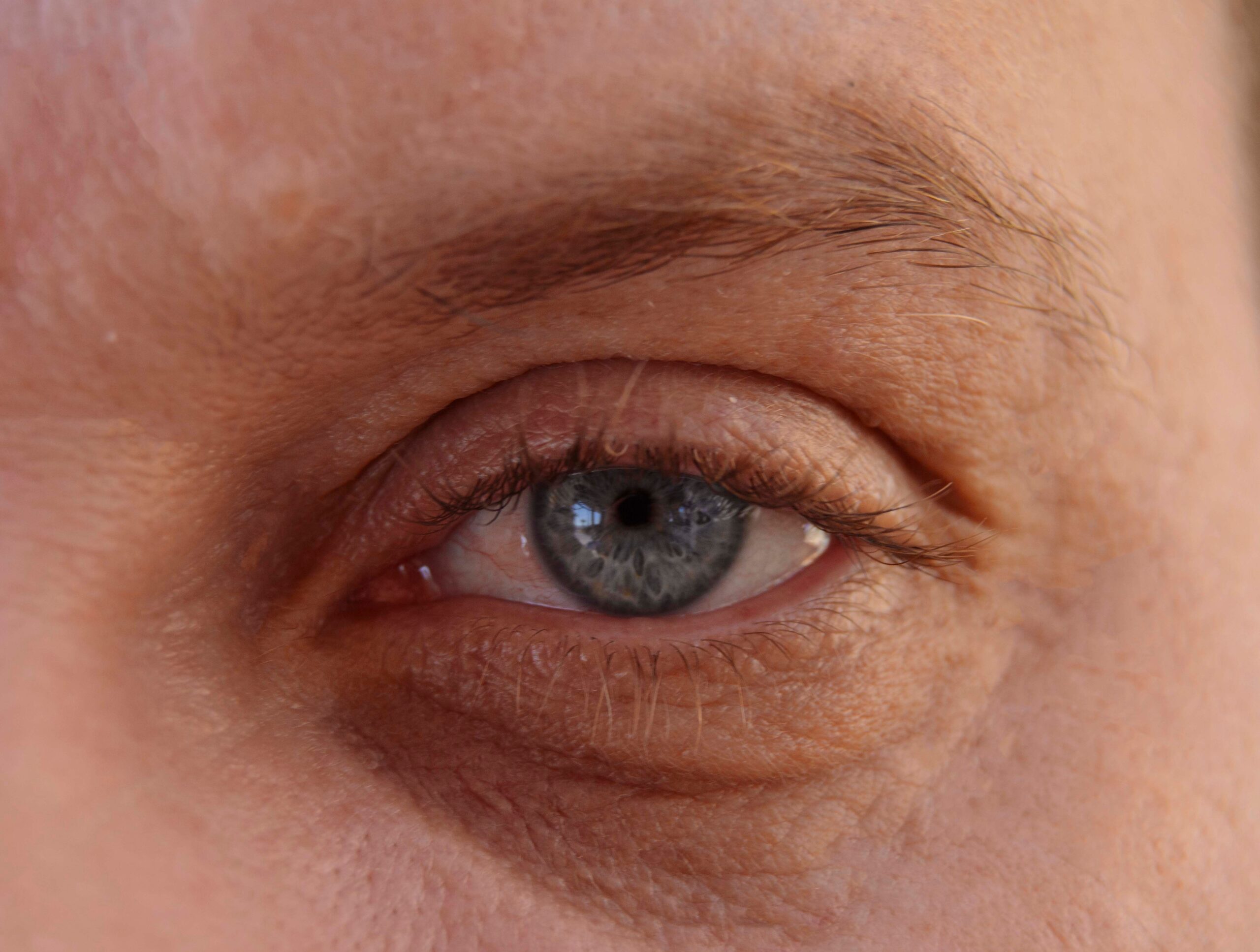
Do At-Home Devices Work for Under-Eye Wrinkles?
Yes, some at-home devices have shown measurable improvements in wrinkles around the eyes. Clinical studies support using at-home fractional lasers and red light therapy for certain eye-area wrinkles. Radiofrequency (RF) also has encouraging research, while evidence for microcurrent is less established.
These technologies mainly target fine lines, crow’s feet, and mild crepey skin by improving the appearance and firmness of the skin. They are not designed to correct prominent under-eye bags or hollows, which involve changes in the tissues beneath the skin.
Here’s how each technology works, what clinical research papers have found, and which concerns it is best suited to address.
What You’ll Learn
- Which at-home technologies have clinical research on wrinkles around the eyes
- How laser, LED, RF, and microcurrent compare
- What results to expect from home treatments
- When professional treatment is more appropriate
What Are You Trying to Change?
Fine lines and crepey skin are closely related to changes in skin structure and elasticity. Crow’s feet involve repeated muscle movement, while under-eye bags and hollows involve changes in the tissues beneath the eyes.
This distinction matters because most at-home wrinkle devices focus on the skin itself.
Fine Lines and Crepey Skin
Fine lines remain visible even when your face is relaxed. Crepey skin looks thin and finely crinkled, often linked to reduced collagen and elasticity.
These are the concerns most suited to wrinkle-focused devices. Laser, LED, and RF treatments aim to improve skin texture or firmness, making lines less noticeable over time.
Crow’s Feet and Expression Lines
Crow’s feet appear at the outer corners of the eyes and deepen when you smile or squint. Repeated muscle movement contributes to their formation, and some lines eventually remain visible even when your face is relaxed.
Botox temporarily reduces the muscle activity responsible for these expression lines. At-home laser, LED, and RF treatments work on the skin instead. They focus on softening existing wrinkles rather than limiting facial movement.
Under-Eye Bags and Hollows
Persistent under-eye bags often result from weakened supporting tissues and fat shifting forward beneath the lower eyelid. Hollows, also called tear troughs, create a depression beneath the eye that casts a shadow.
Wrinkle-focused devices won’t reposition protruding fat or restore lost volume. For pronounced bags or hollows, professional assessment is more useful than purchasing another skin-tightening device. The American Academy of Ophthalmology explains the common causes of under-eye bags and available treatment approaches.
At-Home Lasers: For Persistent Fine Lines
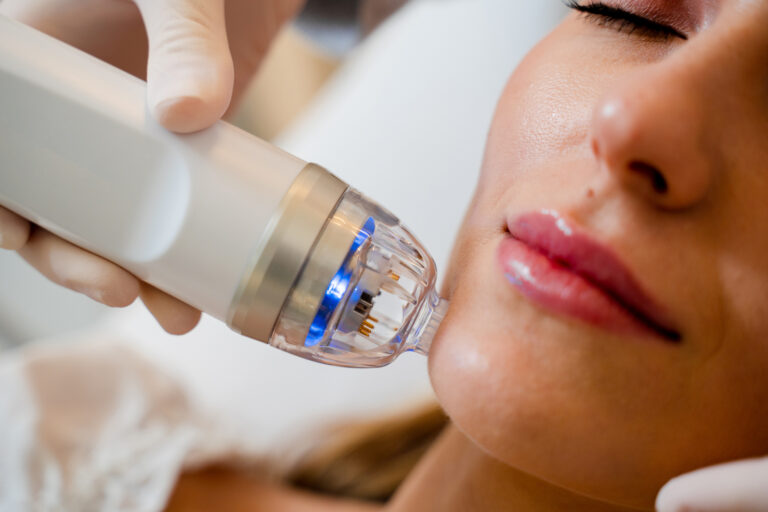
Fractional laser treatment has direct clinical research on wrinkles around the eyes.
A 2012 clinical study evaluated a non-ablative fractional laser designed for home use. Participants treated their periorbital wrinkles daily during the initial phase, then continued with twice-weekly maintenance. Results found that 90% of the 124 participants who completed the study improved by at least one grade on the wrinkle scale after the initial treatment phase.
These findings support home-use fractional laser as an option for gradual improvement in persistent fine lines. The study’s treatment schedule also highlights the importance of consistent use.
Before purchasing, make sure that the device is intended for the area you want to treat. Not every laser is designed for use on the lower eyelid.
Red Light Therapy: For Gradual Wrinkle Improvement
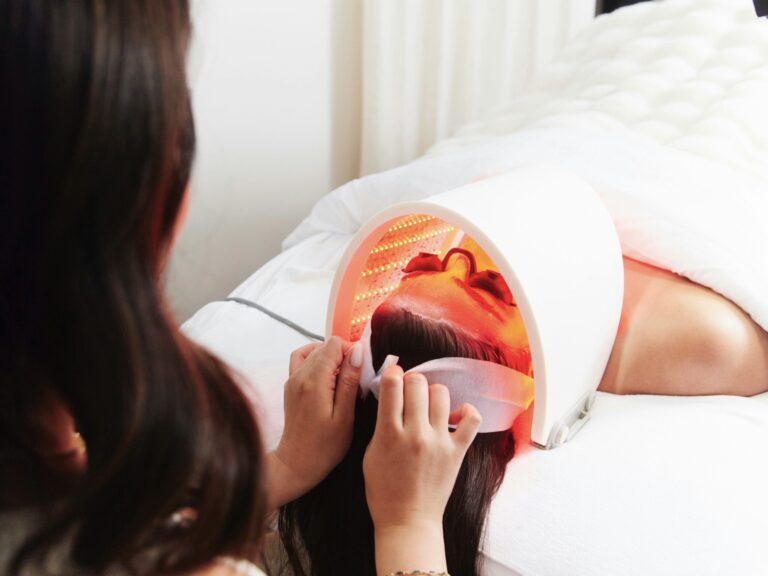
Red and near-infrared LED therapy offers another option for improving fine lines without the peeling associated with some resurfacing treatments.
A 2025 study examined an LED mask combining 630 nm red LED and 850 nm near-infrared light. The study involved 60 participants who used the device to treat crow’s feet. Results showed significant improvements in wrinkle scores from week 8 onward.
The results also suggest that patience is important: improvements developed over several weeks of regular use. When choosing an LED device, pay attention to its coverage. Some facial masks leave the under-eye area exposed, so the light may not reach the skin you want to treat. If needed, consider an LED product designed specifically for the eye area.
Radiofrequency: For Mild Crepiness and Reduced Firmness
Radiofrequency (RF) uses controlled heat to stimulate collagen remodeling and improve skin firmness. It’s most suited to treat mild crepiness and skin that has begun to lose elasticity.
A 2017 clinical study evaluated a home device combining RF and LED energy on the periorbital area. 30 participants completed 6 weeks of treatment. Results showed an average improvement of 1.49 grades on the Fitzpatrick wrinkle scale.
The findings are encouraging for RF treatments around the eyes. Because the device combined RF and LED, however, the study assessed the combined treatment rather than RF alone.
Microcurrent: Is It Effective for Under-Eye Wrinkles?
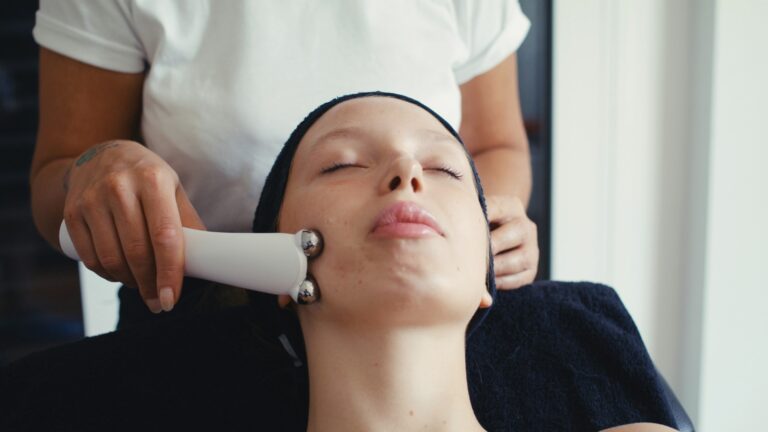
Microcurrent devices use low-level electrical currents and are commonly marketed for facial toning and a temporarily lifted appearance. However, clinical research specifically demonstrating lasting improvement in under-eye wrinkles remains limited.
For established fine lines, laser and LED have more directly relevant research. Microcurrent fits better into a broader facial-toning routine than as a primary treatment for under-eye wrinkles.
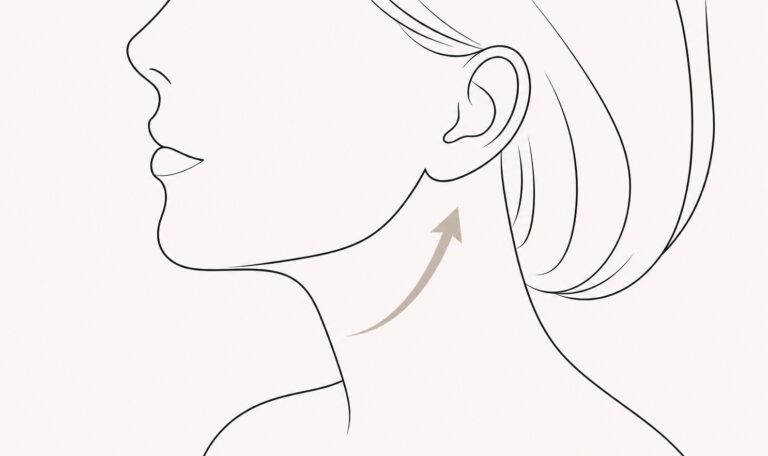
Read more in our guide to how microcurrent devices lift and tone the face.
How to Choose the Right At-Home Device
Use your under-eye concern to narrow the options:
- Persistent fine lines: Home fractional laser has direct clinical research on periorbital wrinkles.
- Crow’s feet: Red and near-infrared LED has encouraging results from a controlled home-use study.
- Mild crepiness and reduced firmness: RF is worth considering, although research specifically isolating its effect around the eyes is less developed.
- Facial toning: Microcurrent is marketed for this purpose, but it is not a first-choice treatment for etched wrinkles.
- Prominent bags or hollows: Consider professional advice.
Also check the device’s permitted treatment areas. Products designed for the face may not allow use on the lower eyelids.
How Much Improvement Should You Expect?
At-home treatments work gradually. The studies discussed above assessed changes over several weeks. Allow about two to three months to see results from gradual treatment, while following your device’s schedule.
Expect improvements such as softer-looking lines, smoother texture, or modestly firmer skin. These treatments won’t stop expression lines from forming when you smile, and they won’t remove bags or fill hollows.
Consistency matters. Results depend on maintenance treatments, so be sure you understand the ongoing commitment. Use extra care around the eyes, as improper use may cause complications.
Does Professional Treatment Make More Sense?
At-home devices can gradually improve fine lines, mild wrinkles, and skin texture. When concerns are more pronounced—such as deeper wrinkles, significant skin laxity, or persistent under-eye bags—clinical treatments give you more choices.
Professional laser treatments deliver energy at carefully selected depths to address wrinkles, uneven texture, and skin laxity. Depending on the laser and treatment intensity, they can stimulate collagen remodeling more extensively than most at-home devices. Ablative fractional lasers remove tiny columns of skin to encourage renewal, while non-ablative options heat the underlying tissue without removing the surface layer. Both approaches have different recovery times and treatment profiles.
Under-eye bags and hollows require a different strategy. Bags caused by protruding fat pads or loose lower-eyelid tissue are structural concerns, so skincare devices are unlikely to make a substantial difference. An oculoplastic surgeon can assess whether treatments such as lower blepharoplasty are appropriate. Hollows, by contrast, relate to volume loss and facial structure; treatment often focuses on restoring volume or improving the transition between the lower eyelid and cheek.
Conclusion
At-home devices offer several options for improving fine lines around the eyes. Fractional laser and LED treatments have clinical research directly examining eye-area wrinkles, while RF has encouraging findings from a combined-energy device.
For fine lines and mild crepiness, these treatments offer a practical route to gradual skin improvement. For prominent bags, hollows, or more significant structural changes, professional treatment is a better option.